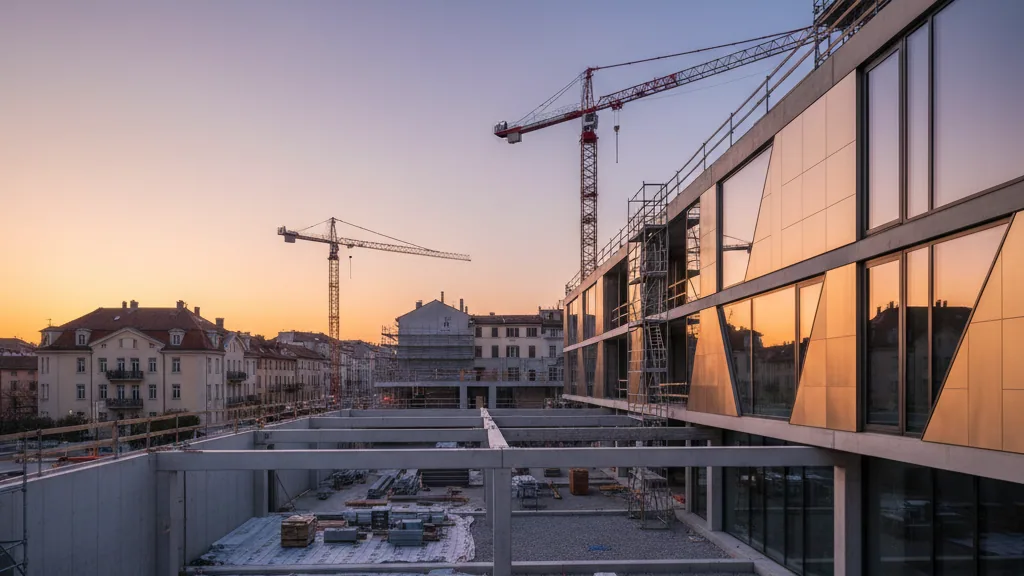
Europe has a structural deficit in its own production of proteins for human and animal nutrition. The majority of demand is currently met by imports, primarily soya. The European Union only produces eight per cent of its own soya requirements. Against this backdrop, the biotech company MicroHarvest from Hamburg is developing an industrial production facility in Leuna Chemical Park. This plant is designed to produce high-quality protein using biomass fermentation on a large industrial scale. Completion and the start of production are planned for the first half of 2028.
The construction project covers a gross floor area of approximately 5,800 square metres. The conceptual annual production is set at 15,000 tonnes of protein, which will be obtained from regional agricultural by-products. MicroHarvest is investing a mid-double-digit million amount for this and plans to create around 25 new jobs at the Leuna site. Project support during the planning phase, including project management and general planning, is being handled by the consulting firm Drees & Sommer SE, which specialises in construction, real estate and infrastructure.
Technological Basis and Strategic Importance
Protein production is based on the fermentation of microorganisms, which use agricultural by-products such as molasses as a nutrient source. Molasses is produced in significant quantities in the Leuna region as a by-product of sugar production. This process enables the conversion of biomass into high-quality protein powder within 24 hours. According to Jonathan Roberz, co-founder and COO of MicroHarvest, the realisation of this project in Leuna offers the opportunity to reduce dependence on international protein supply chains and strengthen regional resilience. A pilot plant in Lisbon, which commenced operations in November 2023 and initially produced 25 kilogrammes of single-cell protein per day, served to verify the scalability of the process. The insights gained from this are now being incorporated into the design planning for the large-scale plant in Leuna, which is considered the first of its kind in Europe.
The experts from Drees & Sommer validated the technical and economic feasibility of the project through a feasibility study. This analysis included regulatory requirements as well as potential risks. Based on this, various planning options were evaluated regarding their economic viability and optimisation potential. Manuel Paulick, project manager at Drees & Sommer, explains the complexity of the planning tasks, which include areas for raw material reception, storage, drying, filling and packaging, as well as supporting fermentation systems, laboratories, offices and technical building equipment. The plant is initially intended to be designed in accordance with GMP+ standards for the animal feed sector, with a view to later expansion to food standards.
Phases of Planning and Market Orientation
The Drees & Sommer project team is currently responsible for the preliminary and design planning for the building as well as parts of the fermentation process. Steffen Butz, lead process engineer at Drees & Sommer, emphasises the necessity of precise coordination of numerous specialist disciplines, suppliers and decision-making processes. Bundling planning, consulting and control tasks at Drees & Sommer is intended to ensure coherent implementation and cost control.
- —Crude protein content of over 60 per cent, exceeding that of chicken breast
- —Contains amino acids, vitamins and minerals
- —Weather-independent production 365 days a year
- —No genetic modification of microorganisms
MicroHarvest intends to initially market the produced protein in the animal feed sector, with a focus on pet food and aquaculture. Products such as dog snacks, developed in cooperation with Vegdog and The Pack, are already available. After receiving approval from the European Food Safety Authority (EFSA) under the Novel Food procedure, the protein is also to be made accessible for human consumption, for example as an ingredient in protein bars or other food products.