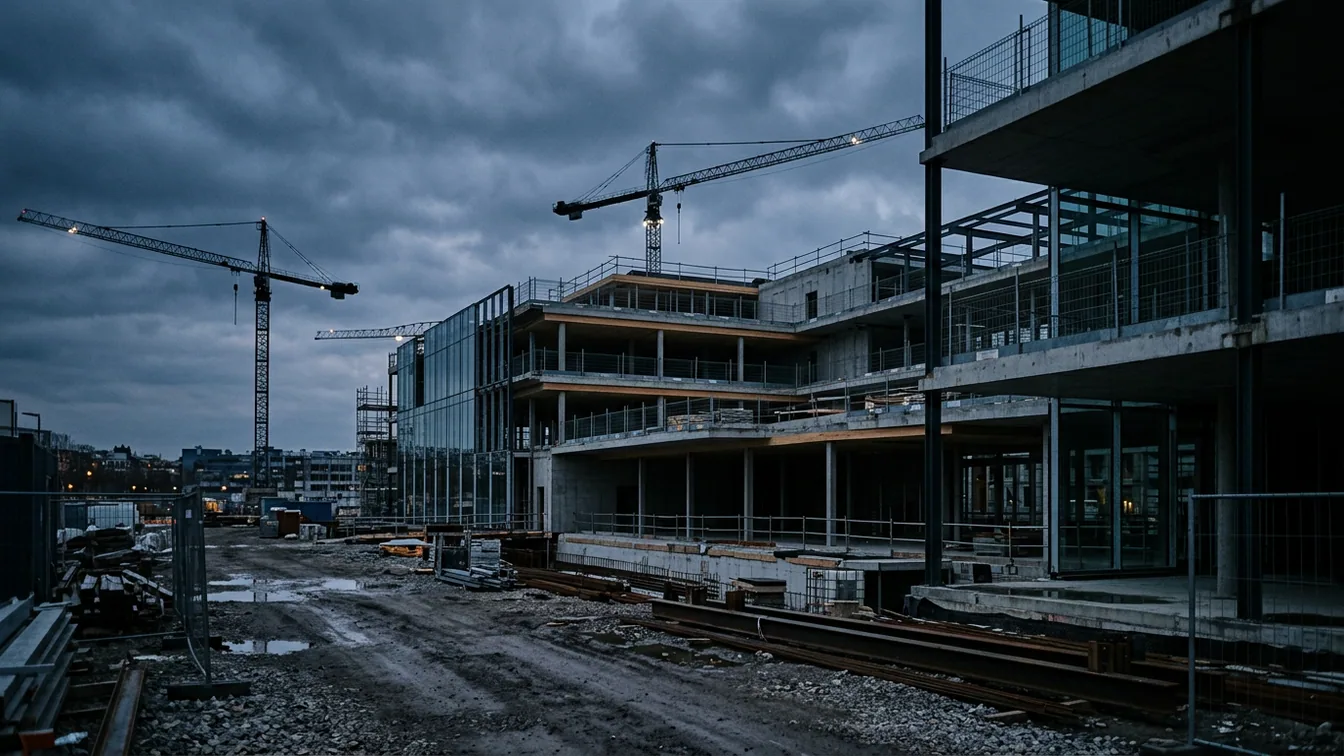
With the entry into force of the new Section 106 "Solar Energy in Buildings" of the Building Modernisation Act (GModG), a nationwide obligation to install solar energy systems on new commercial buildings will be enshrined from 2027, provided these have a usable floor space of more than 250 square metres. This requirement supplements existing solar obligations in some federal states, with stricter state-level regulations potentially remaining in force. Early consideration of solar potential is already envisaged in the building's design phase.
Currently, public discussion is primarily dominated by the upcoming amendment to the Renewable Energy Sources Act (EEG) and the reform of grid charges, known as AgNes. Nevertheless, these topics are immediately relevant for companies planning new constructions for 2027. The economic framework conditions for the subsequent operation of solar systems have not yet been finally defined, which poses a challenge for investment decisions. Regardless, forward-looking planning is essential.
Integrated Planning of Building and Photovoltaic System
For commercial properties, experts advise planning buildings and photovoltaic systems as a single unit from the outset. This includes early coordination of the grid and transformer connection, as well as consideration of fire protection and roof static requirements. Such an integrated approach creates the necessary conditions for the safe and economic operation of the future solar system already in the building planning phase.
Florian Appel, Managing Director of Enexdo GmbH, emphasises that the solar obligation brings a topic into focus that should in any case be integrated into building planning at an early stage. He highlights the current situation in which companies must make decisions, although the future framework conditions for photovoltaic systems are not yet fully clarified.
Economic Design and Open Questions
The dimensioning of a rooftop system should be based on the specific electricity demand and consumption profile of the respective operation. Appropriate storage or marketing options must be provided for surplus solar power produced. The economic calculations must also include the outstanding effects of the EEG amendment and the AgNes grid charge reform. These factors are crucial for the final profitability and planning certainty of solar systems on commercial properties.