P
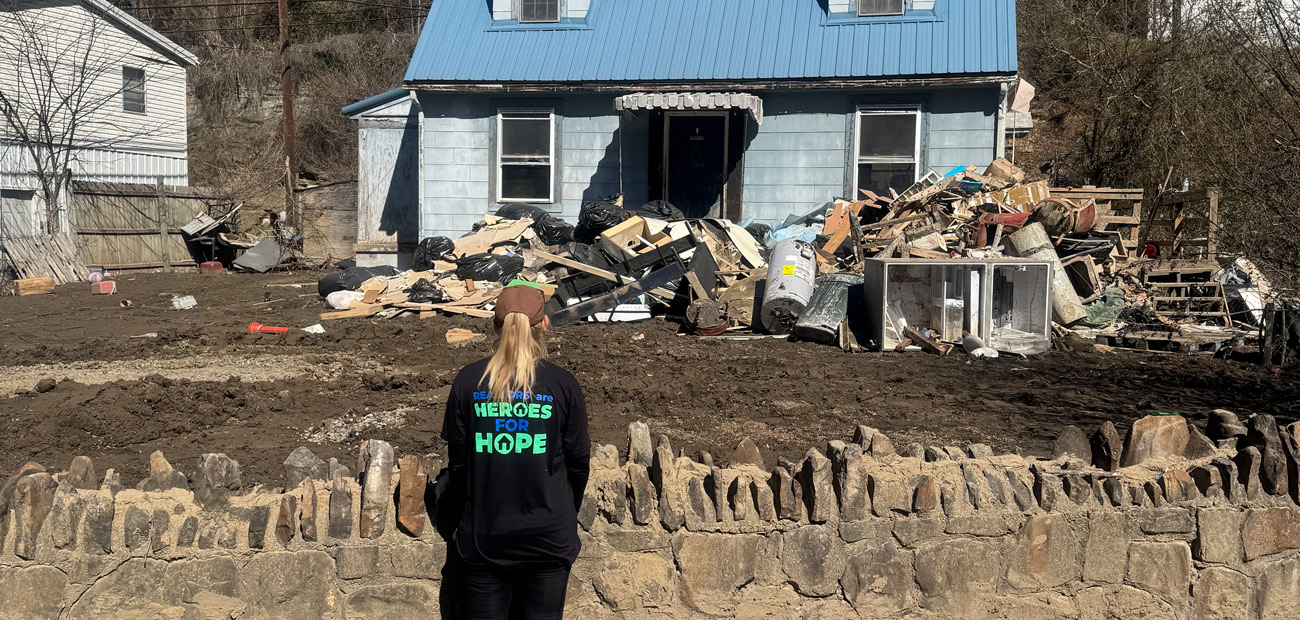
aige Powers, president of the West Virginia Association of REALTORS®, stepped into the flood‑ridden streets of McDowell County in February 2024 and found Keirstein Lester’s home swamped with water. Lester, a foster mother of six, was skeptical when Powers offered a relief application from the REALTORS® Relief Foundation (RRF). “We thought someone was trying to buy out houses,” she recalled. After a hesitant conversation with her mother, Sandi Blankenship—director of God’s Grace Ministry and a local mover and shaker—Lester completed the form. Within days, a $1,000 check arrived, covering drywall and flooring repairs and proving a lifeline for a family that had lost everything.
Blankenship, who runs a pantry in Welch, initially warned her daughter against accepting money from strangers. “In a high‑emotional state you’re vulnerable,” she said. Yet the check’s authenticity was confirmed, and word spread. Powers, along with Sarah Milam and state association president Alisa Jackson, organized the distribution of the $96,000 RRF grant that the West Virginia Association received after the flood. They brought paper applications to the area, helped victims fill them out, and transported the completed forms to the state office two hours away. The process repeated weekly until the grant was exhausted.
RRF’s model relies on local and state REALTOR® associations to review and disburse funds. Grants are funded by REALTORS®, associations, and industry partners; the National Association of REALTORS® covers all administrative costs, ensuring every dollar reaches disaster victims. The foundation’s rapid response is a key part of its appeal. “There’s no other organization that can get money into people’s hands so fast,” Powers says.
The foundation’s reach extends beyond West Virginia. In June 2024, James Russ II, a RE/MAX broker in Ruidoso, New Mexico, heard of fires threatening his town while attending a convention. Despite initial disbelief, he and his wife evacuated their home and later discovered it had been destroyed. RRF stepped in, providing $500,000 to the community and $2,500 per household. When a flood struck Ruidoso in July 2025, RRF added $125,000 to the relief effort. Russ, who lost his own home, became a volunteer, helping to distribute applications and advocate for victims on radio and social media. “RRF shows people that we genuinely care,” he says.
Since its founding after the September 11 attacks, RRF has distributed $50 million to more than 26,000 households across 49 states and territories. In 2024 alone, it aided nearly 4,000 households in 23 disasters. The foundation has never turned away a request for help, and its board remains committed to that promise. As it approaches its 25th anniversary, RRF seeks to inspire 25,000 NAR members, 500 state and local associations, and 100 industry partners to donate, aiming to keep the foundation as the first light after disaster.
Dave Legaz, a former NYPD sergeant who served on 9/11, now a broker at Keller Williams Realty Landmark, became an RRF director. He recalls the terror of that morning and the subsequent five days of rescue work. “After 9/11, I looked for purpose,” he says. RRF gave him that purpose, allowing him to bring hope to families in crisis. Legaz emphasizes that the foundation operates without commission pressure; it focuses on financial assistance for housing needs.
Powers highlights RRF’s speed and impact: “There’s no other feeling like it to be able to help.” The foundation’s ability to mobilize resources quickly and deliver them directly to those in need has earned it the trust of communities and REALTORS® alike. As RRF continues to grow, its mission remains clear: to be the first light after disaster, offering immediate, tangible relief to those who have lost everything.