According to the latest European Lender Intentions Survey by real estate services provider CBRE, lenders' attitude towards the office property sector is improving. Office properties climbed to third place on the attractiveness scale of the surveyed institutions, an increase of three places compared to the 2025 survey.
Looking at lender types in detail, office properties were only surpassed by residential properties among banks. This suggests a restored confidence in the fundamentals of this segment. Chris Gow, Head of Debt Advisory Europe at CBRE, emphasises that the survey results show alignment between market participants' intentions and actual market activity. Financing margins are declining, enabling more favourable conditions, while increasing investment volumes and a continued limited supply underscore the sector's strength.
Investment Volumes and Financing Willingness
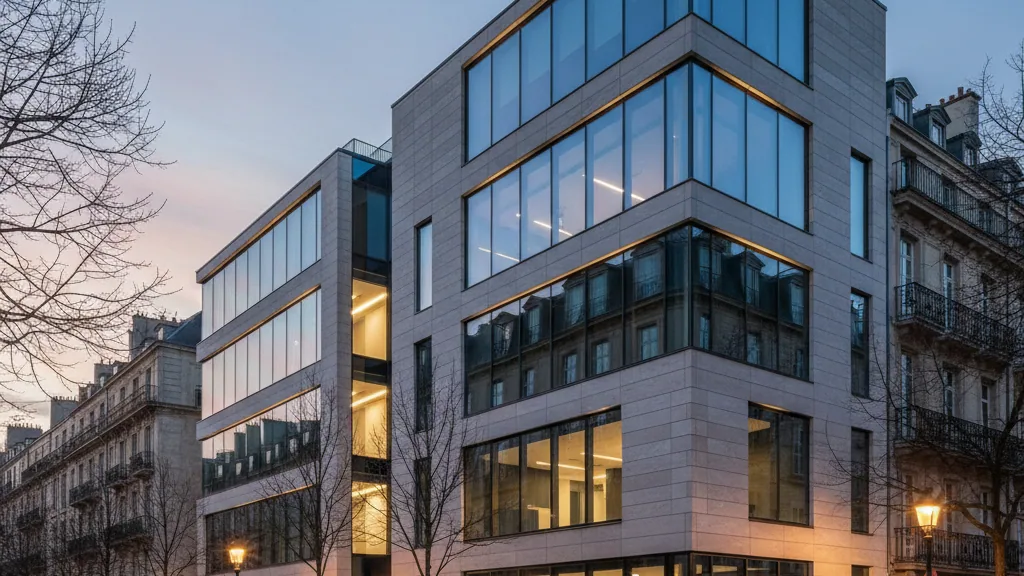
Investment volumes for office properties in Europe reached a positive result of EUR 10.7 billion in the first quarter of 2026. This represents a six percent increase compared to the same quarter last year. The full year 2025 recorded a volume of EUR 48.5 billion, a 13 percent increase year-on-year. An example of banks' willingness to finance large-volume office transactions is the Trocadéro office building in Paris, which received the largest single asset financing in Europe since the pandemic last year and was sold by CBRE.
The residential sector continues to hold the top spot in the ranking of preferred segments, followed by industrial and logistics properties, as noted by Professor Dr. Ralf J. Klann, Head of Debt and Structured Finance Germany. Although data centres were mentioned by few lenders as a primary sector, sentiment here has significantly improved. Newly concluded financings in this area showed higher average loan-to-value ratios than in the previous year. Lenders are increasingly focusing on data centres, given their central role for digital infrastructure and the growth of Artificial Intelligence. Klann also points out, however, that some market participants still lack the necessary conviction due to limited experience.
Alternative Segments and Outlook
Alternative real estate segments such as co-living, affordable housing, senior living, healthcare properties, and self-storage are also gaining importance. 86 percent of lenders plan to finance at least one of these segments, an increase of five percentage points compared to the previous year. While banks primarily prefer residential-adjacent sub-segments, non-banks show greater openness to a broader spectrum of alternative uses.
Around 72 percent of lenders intend to expand their lending activities compared to the previous year, indicating continued robust liquidity in the European real estate financing markets. The study also reveals a significantly increased willingness to provide debt capital for project developments. The proportion of lenders who wish to offer such financing rose from 60 percent in 2025 to 69 percent in 2026. Non-banks show a higher risk appetite here, at 81 percent, while banks focus almost exclusively on senior loans. Dr. Jan Linsin, Head of Research Germany at CBRE, summarises that the improved sentiment across all real estate segments indicates an improvement in real estate market fundamentals, even if the geopolitical situation continues to play a role. Strong demand for new financings is expected in the second half of the year, as institutions aim to meet their budget and allocation targets before year-end.