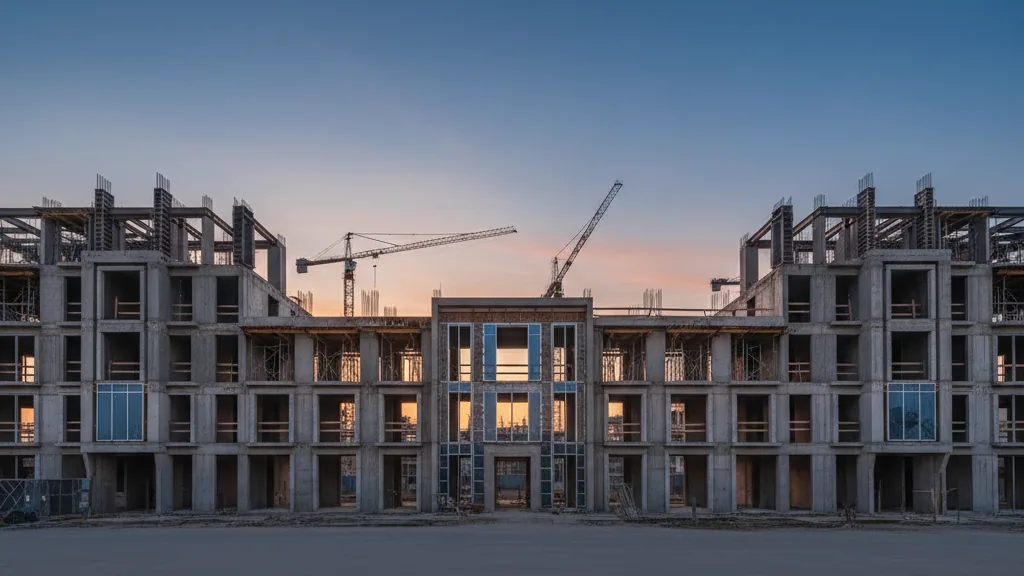
An inconsistent picture is emerging in the Sun Belt multifamily housing market as the region recovers from a period of oversupply. A nearly decade-long construction boom, fuelled by massive immigration and favourable financing conditions during the pandemic, led to a significant oversupply of housing. Although the market is slowly returning to more normal conditions, the pace of this recovery varies considerably between individual markets.
Rents rose by 30 per cent from 2021 to 2024, while new supply grew by 673,000 units, according to data from Yardi Matrix. Initially, it was predicted that the oversupply would be absorbed within two years. However, this development did not occur uniformly across the board. Yardi Matrix revised its initial assessment that high-supply markets would see positive rent growth again by the end of 2026. The new forecast now projects positive rent growth for all major high-supply markets by the end of 2027, as construction activity has significantly decreased and the absorption of new units has increased in most oversupplied markets.
Interest Rate Policy and Market Imbalances
The complexity of the market shift in the Sun Belt is further intensified by the Federal Reserve's interest rate policy. A quarter-point rate hike in September was sufficient to influence the calculations of developers and investors. Further rate increases are not ruled out by observers. John Orsak, Executive Vice President at Lincoln Property Company, noted that the recent monetary policy adjustments indicate that the post-boom environment will be less volatile. He emphasised that while markets are going through different phases, they are generally moving in the same direction – towards a balanced market.
South Florida also shows differing market dynamics. Gay Cororaton, Chief Economist at Miami Realtors + RWorld, reported that Miami's rental market had become tighter and more expensive, with a vacancy rate of 6.4 per cent in August, slightly down from 6.8 per cent in July. In contrast, the vacancy rate in Port St. Lucie rose from 7.2 per cent to 7.5 per cent, and in Tampa it reached 8.5 per cent, based on data from Apartment List. Although conditions vary, Cororaton does not see a general oversupply in the Miami and Port St. Lucie metropolitan areas.
Migration and its Impact
The crucial driver of the pandemic-induced Sun Belt boom, migration, has noticeably slowed. An analysis of census data for the 50 most populous metropolitan areas revealed significant annual declines in migration rates. For example, domestic population inflow in Tampa decreased by 70 per cent within one year according to a Redfin report, in Orlando it almost disappeared, and Atlanta shifted from a net gain of 16,663 to a net loss. Florida's statewide net internal migration fell from 314,000 in 2022 to approximately 64,000 in the most recent data, an 80 per cent drop from the pandemic peak.
- —Texas remained in first place in 2024 with approximately 76,000 net domestic migrants, which nonetheless represents a 44 per cent decrease from 2023 (approx. 136,000).
- —Phoenix recorded an increase in net domestic inflow from 19,378 to 21,364 individuals.
- —Las Vegas showed a significant increase from 5,069 to 12,225 migrants.
- —Decreasing affordability in several Sun Belt metropolitan areas, as well as rising property insurance costs and climate considerations in parts of Florida, are curbing migration.
The immigration policy of the current US government also plays a role, as a general decline in foreign arrivals impacts demand for rental housing. The U.S. Department of Housing and Urban Development reported that from 2021 to 2024, immigration accounted for at least two-thirds of total net renter household growth at the national level and even reached 100 per cent in some regions. The Census Bureau predicts a decline in net immigration to around 321,000 in the fiscal year up to June 2026, after 1.3 million in the previous year.
The shrinking pool of migrant renters is also evident in the fact that domestic renter mobility fell to 21.6 per cent in 2026, compared to 26.7 per cent in 2014. This decline in nationwide multifamily housing starts is a clear sign of a rebalancing market, where the speculative bubble cannot continue to grow due to a lack of impetus.