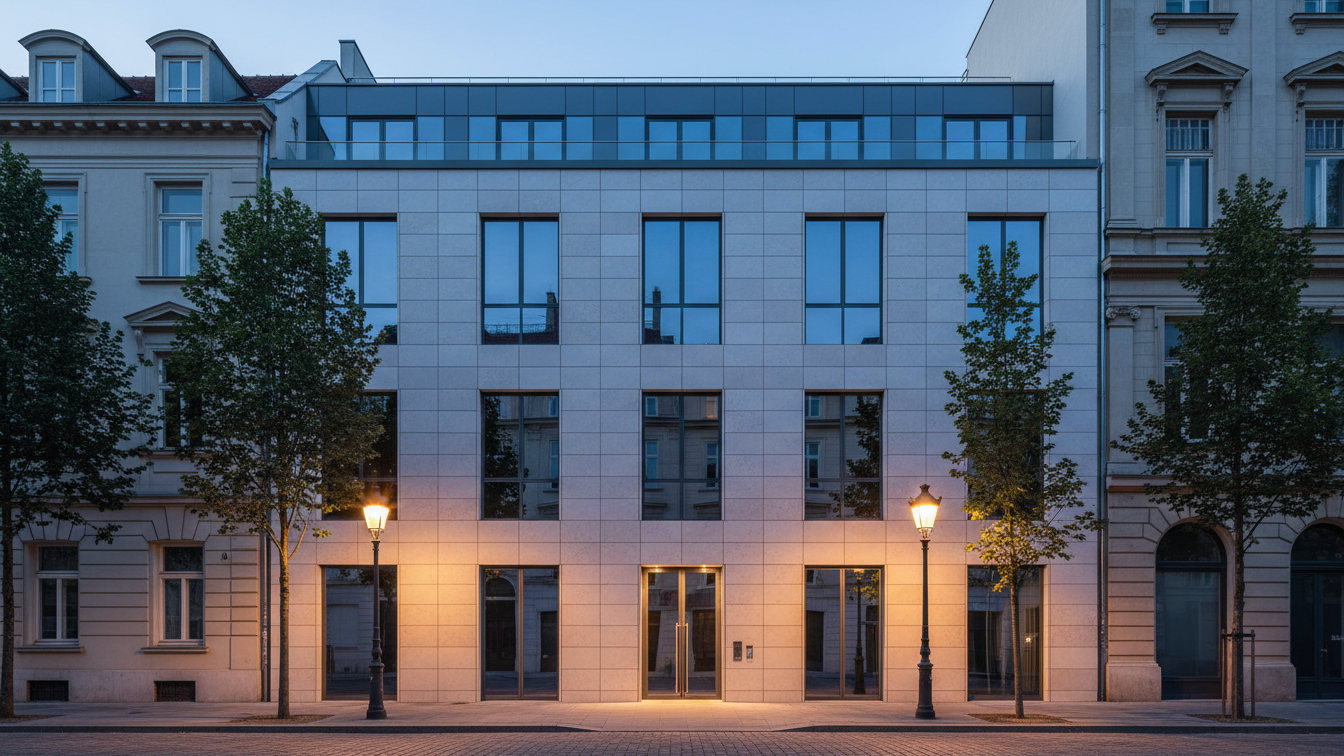
SolarEdge, a leading provider in smart energy, and Solation, a specialist in "virtual storage", have collaborated with global investment manager PATRIZIA to present the first German commercial building that donates surplus solar power to a charitable organisation. The project, realised in Bonn, establishes a novel concept that enables commercial properties to generate not only economic and ecological but also social value. SolarEdge acts as the technology partner for all future Solation projects to optimise energy yields for both tenants and charitable institutions.
The donation of electrical energy has previously not been practically feasible for individual buildings. While large-scale solar projects often use complex power purchase agreements, commercial rooftop installations were typically limited to self-consumption or selling surplus energy back to the grid. Regulatory complexity, as well as the need for specialised technical, contractual, and commercial expertise, prevented the establishment of a model for permanently allocating a portion of solar power generation to local charitable organisations. The model developed by Solation integrates electricity donation firmly into the long-term energy structure of the property, overcoming these hurdles.
How the Model Works and its Advantages
The beneficiary enters into an electricity contract for its total requirements. A predefined proportion of the building's solar power generation is supplied at a price of zero cents per kilowatt-hour. The organisation's remaining electricity requirements are covered by its regular electricity contract. This eliminates the need for separate technical project management and ensures the availability of solar power regardless of its generation time. The concept is based on Solation's established virtual battery system for multi-tenant commercial buildings, which was first introduced with SolarEdge technology in the fourth quarter of 2025.
Solation's innovative model complies with the requirements of the German tenant electricity ordinance. Here, solar power is treated as "virtually stored" and then allocated to participating tenants in the building. This maximises the on-site self-consumption of solar power without requiring a physical battery storage solution. At the Bonn site, approximately 90% of the generated electricity remains within the building, while 1% is permanently allocated to a local charitable organisation.
Technology and Scalability Potential
SolarEdge was chosen as the technology partner due to its DC-optimised PV systems. These systems utilise power optimisers at the module level to maximise energy generation and reduce power losses due to shading or module mismatch. This increase in efficiency helps to boost energy cost savings for both building tenants and the beneficiary charitable organisations. Karl Viertel of SolarEdge, GM Enterprise Services Group, emphasised the role of technology in generating as much energy and value as possible from every rooftop, while simultaneously ensuring high safety standards for commercial buildings.
- —Local charitable and social organisations in the Bonn area can apply to be the project's first beneficiaries.
- —Requirements include a maximum spatial proximity of 4.5 kilometres to the building, an annual electricity consumption of over 100,000 kWh, a smart meter, and a willingness to switch to a compatible electricity tariff.
- —The donation begins after the recipient has been selected and technical and contractual requirements have been met.
- —Sebastian Hugl, CEO of Solation, expressed the expectation that the concept will be implemented in 1,000 buildings in Germany, where approximately 280,000 office buildings exist, by 2030. Such a scaling could make a substantial contribution to local energy supply.