Artificial intelligence (AI) is expected to transform the composition of US office jobs more significantly than it will eliminate a substantial portion of these positions. This is according to a current CBRE Research report. The analysis suggests that while AI technologies could automate certain tasks, they will simultaneously create new roles and responsibilities within the office economy.
The report highlights that the effects of AI on the labour market are multifaceted. Jobs involving repetitive and predictable tasks are expected to be more affected. At the same time, it emphasises increased productivity and the need for human interaction in complex problem-solving and creative areas.
Workforce Adaptation and Office Concepts
The study predicts that companies and their employees will need to adapt to this development. This includes investments in further training and retraining to adjust the skills of the workforce to new requirements. The design of office spaces could also change to promote collaborative and innovative ways of working, supported by AI tools.
In the long term, the introduction of AI could lead to a redefinition of efficiency and value creation in office environments. Rather than causing massive job losses, CBRE Research views AI more as a catalyst for an evolutionary transformation of the working world. The focus shifts from manual or administrative processes to strategic and creative activities that require human judgment.
Implications for the Property Market
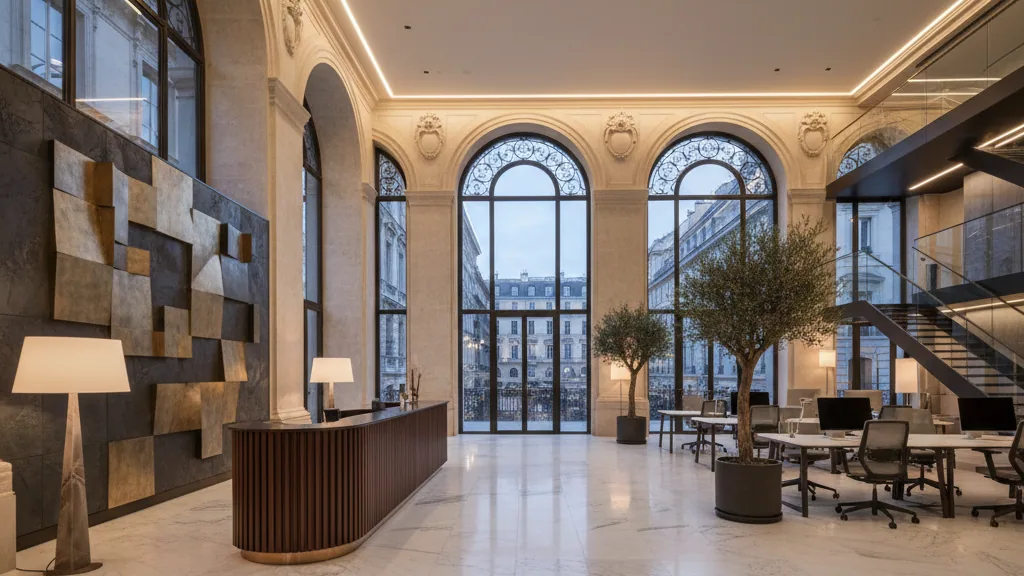
For the office property market, this means that the demands on office spaces will continue to evolve. There could be an increased demand for flexible workspaces and collaborative zones. Offices will increasingly be designed as places for meetings, knowledge exchange, and innovation. Buildings that offer a technological infrastructure to support AI-driven processes while also promoting employee well-being are likely to become more attractive.
- —Redefinition of job content through automation of repetitive tasks.
- —Increasing demand for skills in data analytics and AI management.
- —Change in office space design towards greater flexibility and collaboration.