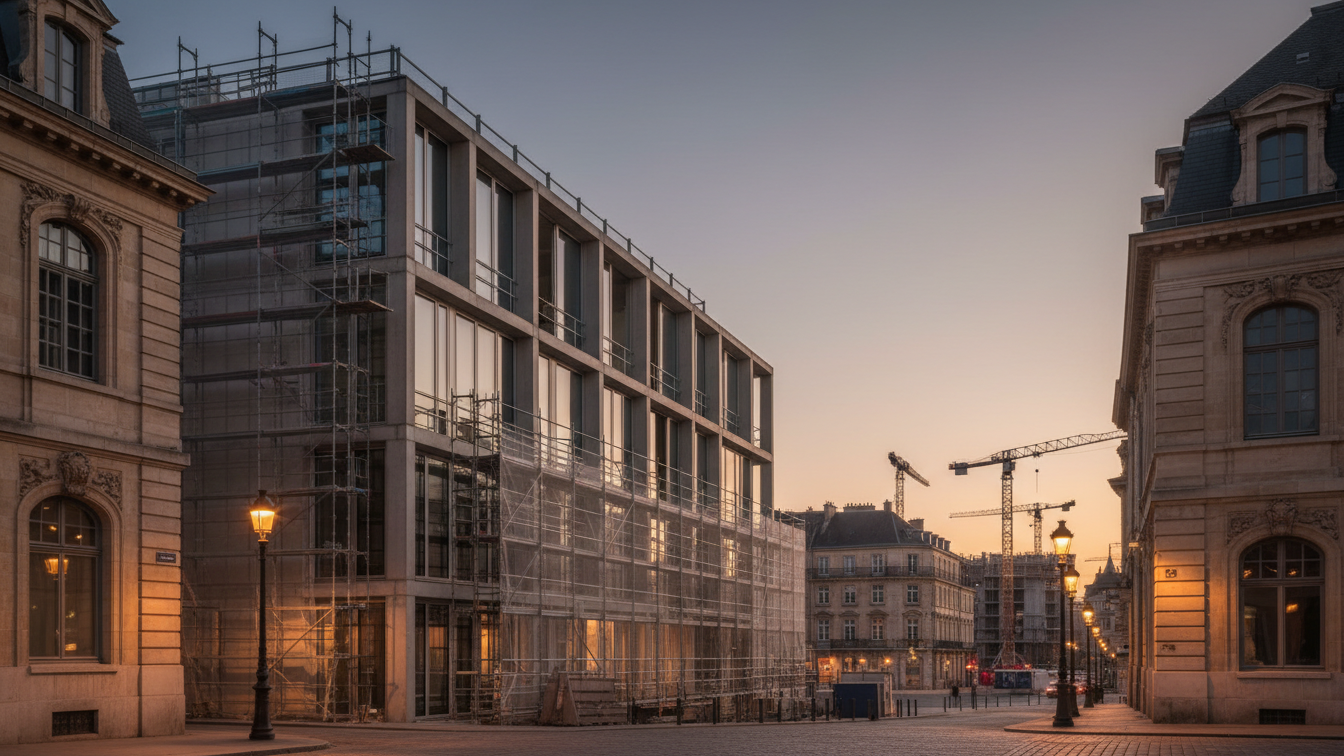
After a multi-year construction phase and an investment of approximately EUR 11 million by Contipark Parkgaragengesellschaft, the Ritterstraße car park in Bielefeld has been fundamentally modernised and is now open again. The site comprises 425 parking spaces as well as 32 charging points for electric vehicles. The modernisation aims to secure the site technically, structurally and functionally for the coming decades and to adapt it to the requirements of urban mobility.
The renovation measures included a complete renewal of the technical systems and a comprehensive overhaul of the building structure. Through the introduction of modern licence plate recognition, the car park can now be used without tickets or cash. Michael Kesseler, Managing Director of Contipark Parkgaragengesellschaft mbH, stated that the renovation of the Ritterstraße car park was no ordinary construction project and that new solutions and challenges had to be continuously overcome during the course of the work. He expressed his delight at the reopening of this site for users in Bielefeld.
Significance for the city centre and mobility planning
The Ritterstraße car park has been a central parking location for Bielefeld city centre for many years. Stephan Opitz, member of the management board and Head of Operations at Contipark, emphasised the importance of not only preserving this location but also raising it to a higher technical and functional level. With its reopening, the city centre gains a modern mobility hub that meets the demands of the coming decades. Olaf Lewald, Head of the Traffic Office for the City of Bielefeld, highlighted that a future-proof city centre requires an intelligent interplay of all forms of mobility, which, in addition to buses, trains, cycle paths and footpaths, also includes modern parking infrastructure. The renovated car park strengthens the accessibility of the Old Town and represents an important component of urban mobility.
Several companies were involved in the project. STRABAG AG Direktion Nord Bereich Sonderbau was responsible for the structural works. Elektro Licht was responsible for the electrical infrastructure. Planning support was provided by the engineering firms KL-ING. GmbH and HPI HIMMEN, which accompanied the general renovation throughout the entire construction period. Wiland Kling, Managing Director of KL-ING. GmbH, noted that existing buildings of this size always held unforeseen challenges, which made this project particularly demanding. Michael Lehmann, Technical Divisional Manager at STRABAG AG, highlighted the flexibility, expertise and perseverance of his team. District Mayor Frederik Suchla emphasised that this investment also represents a clear commitment to the city centre as an economic location, as good accessibility is a decisive factor for vibrant city centres.
Scope of renovation works
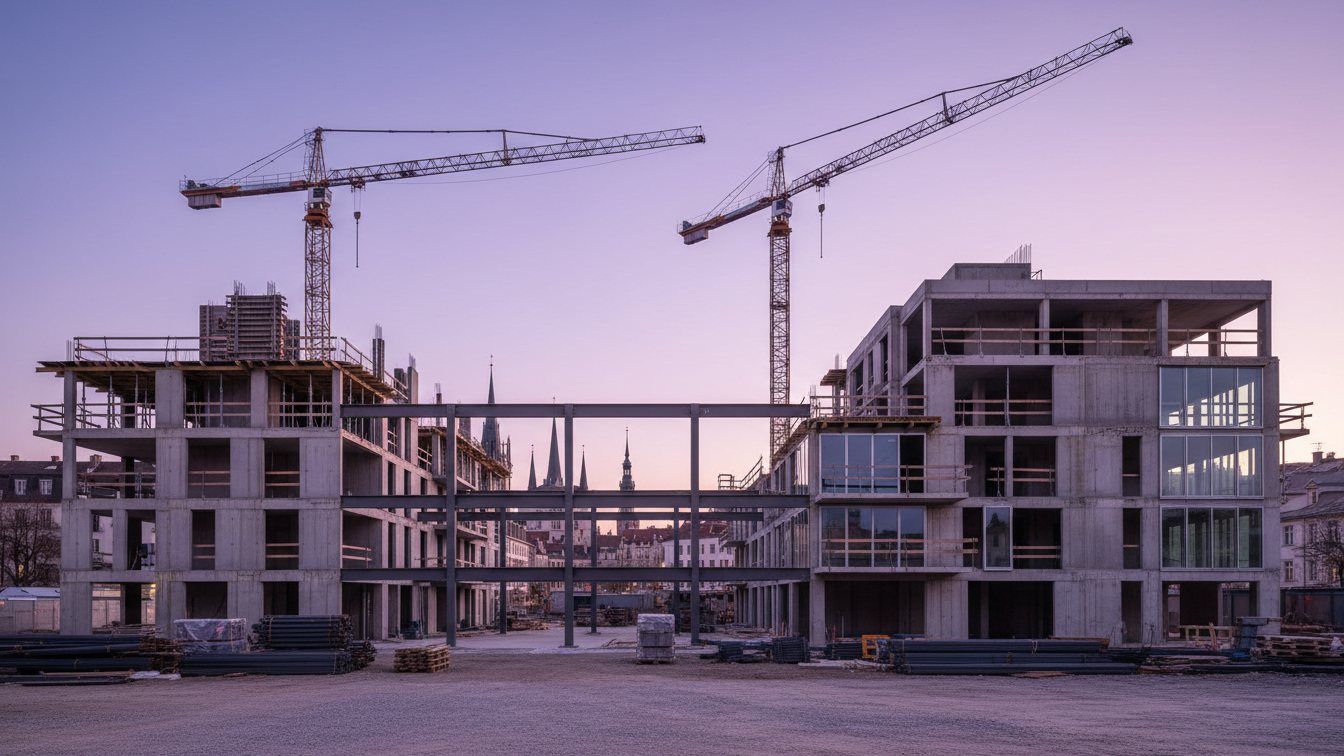
Although the car park's supporting structure was retained, almost all other areas were renewed. The floors and ceilings of the seven parking levels were dismantled and re-concreted. During construction, 325 heavy-duty props and over 26 tonnes of bracing struts ensured the building's stability. Over 8,100 square metres of ceiling panels were renewed, approximately 1,480 cubic metres of concrete were delivered in 211 mixer trucks, and 215 tonnes of reinforcing steel were installed. In addition, there were over 44,500 reinforcement connections and more than 8,600 square metres of new floor coating. Particular challenges were posed by the severe winter at the beginning of 2026, which required temporary heating of the entire car park to avoid jeopardising construction progress.