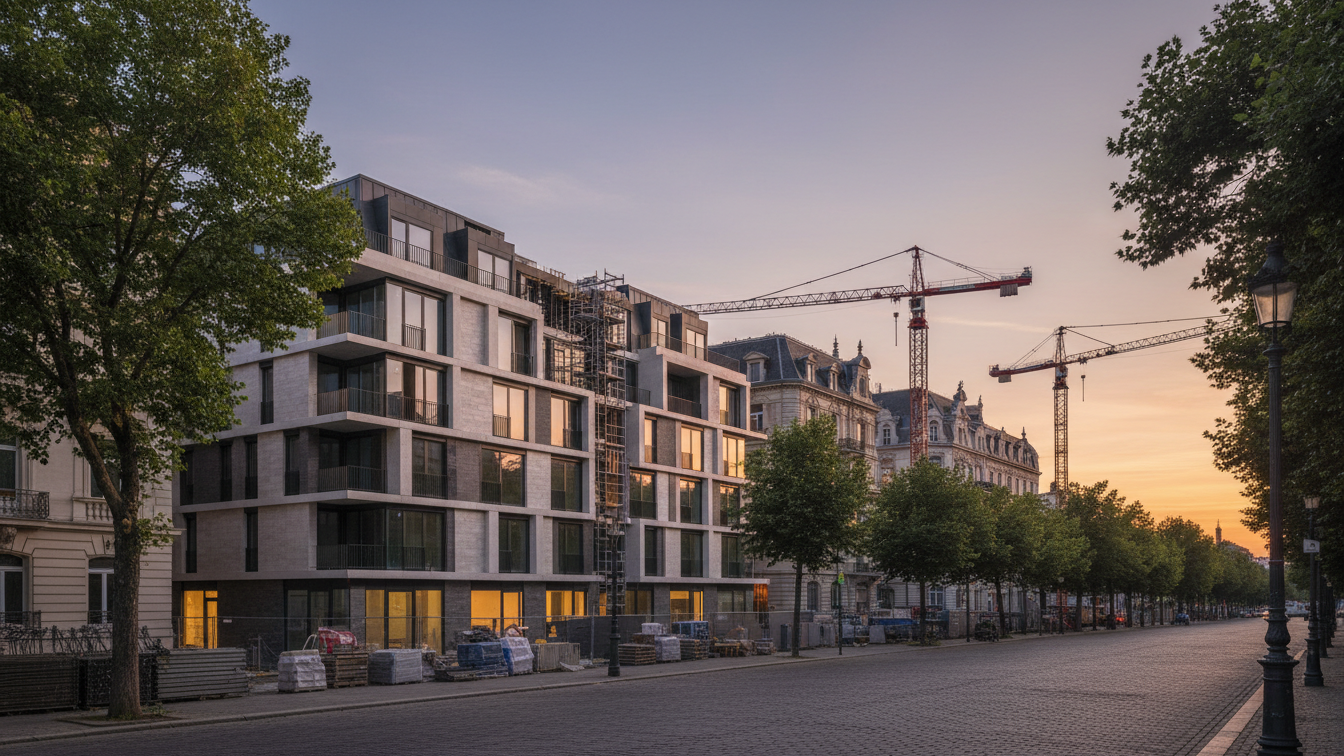
New housing construction in Germany is expected to remain at a low level until the end of 2026. Completion figures will amount to around 211,000 units, representing only a slight increase compared to the previous year and among the lowest values of the current cycle. This development means that new construction activity does not meet actual demand. According to a current analysis by JLL, titled 'Perspectives in New Housing Construction 2026', the actual annual new build deficit, at approximately 80,000 units per year, is significantly higher than previously assumed.
The study highlights that a regional imbalance exacerbates the housing shortage. Dr. Sören Gröbel, Director of Living Research at JLL Germany, states that there is a particular lack of new housing in metropolitan areas and growth centres, while rural regions sometimes show an oversupply. According to JLL, around 50,000 new homes are built annually in areas with stagnating or declining demand. These units are not available to dynamic growth regions.
The situation in Germany's eight largest cities is particularly striking: here, only 42 units are completed per 10,000 existing homes, although 62 new homes would be needed. In contrast, construction activity in rural areas, with 41 units, significantly exceeds the actual demand of 23 units. In addition to this regional imbalance, the JLL study identifies a qualitative mismatch. Many local markets show an increased demand for smaller residential units due to demographic changes, while there is an oversupply of larger units.
About 21 percent of regional markets are affected by such a qualitative imbalance, where smaller flats are urgently needed, while too many large units exist which are often not substitutable. This imbalance leads to an additional annual demand for 16,300 homes in the coming years, which has not been sufficiently considered to date.
Cost Development and Profitability
A significant factor for the low level of new construction activity is construction costs. Dr. Gröbel emphasises that construction costs have reached a historically high level. This was initially due to stricter technical requirements from 2002 onwards, followed by a material price shock from 2020 and an interest and capital cost shock from 2022. Profitability for project developers reached a low point in 2024 but has been slowly recovering since. The difference between the cost-covering minimum rent and the achievable new build rent decreased from EUR 6.40/m² in the first quarter of 2024 to approximately EUR 1.60/m² at the end of 2025.
Despite this recovery, the situation remains fragile. Tensions in the Iran conflict could lead to further cost increases for oil-based bitumen and the energy costs of construction machinery. Moreover, increased upward pressure on interest rates has been observed again since the beginning of 2026. Roman Heidrich, Lead Director Residential Valuation at JLL Germany, explains that new construction projects are currently profitable almost exclusively in the highest price segment, with rents over EUR 21.50/m². However, this premium segment is affordable for only about ten percent of households.
Limited demand in this segment and high requirements for the micro-location restrict the number of possible projects. This niche market cannot compensate for the lack of construction activity in the broader and more affordable market segments. While 62 percent of households would be able to afford the mid-price segment (EUR 8.50/m² to EUR 11.00/m²), this pool shrinks considerably in the premium segment. Successfully addressing the demanding premium target group also requires perfectly positioned locations, which are rare. Furthermore, in many municipalities, there is political resistance to the construction of high-priced housing.
Perspectives and Risks
Investments in cost innovations such as modular construction and the active use of regulatory simplifications, such as the planned 'Building Type E', could fundamentally improve economic viability and make projects in broader rental segments profitable again. These segments carry a lower marketing risk than the pure premium market.
Despite the tense overall situation, the beginning of 2026 showed initial cautious positive signals. The number of building permits increased slightly, and the shortage of orders in the construction industry decreased to 43.4 percent, the lowest value since July 2023. The cancellation rate for approved projects also fell to 10.8 percent in March and remained stable in April. Dr. Gröbel, however, warns of increasing uncertainties. Business sentiment deteriorated significantly in April and May 2026, primarily due to more pessimistic future expectations in view of interest rate concerns and geopolitical instability. The recovery path therefore remains extremely fragile.