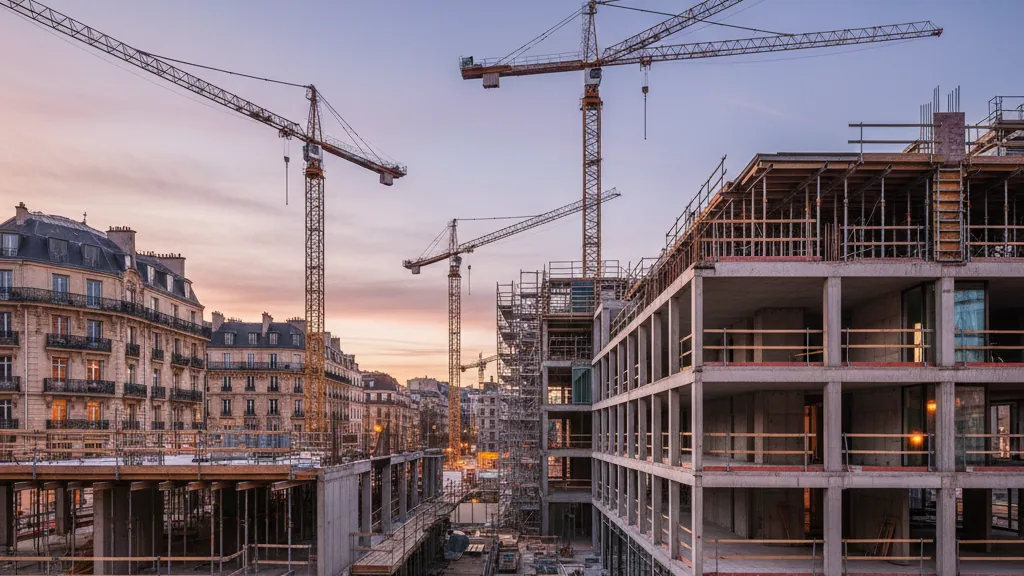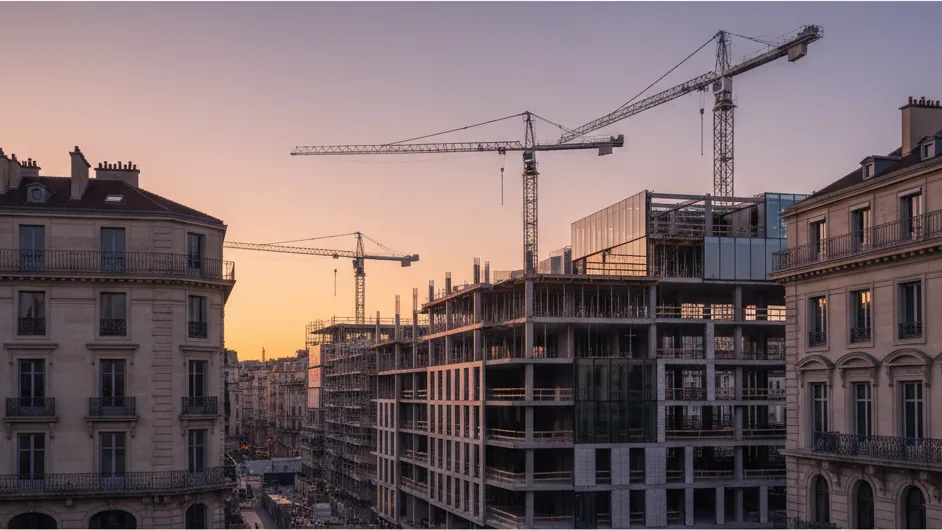
The Housing Alliance (Verbändebündnis Wohnungsbau) has, in an emphatic urgent letter, criticised the federal government's massive cuts to funding for new residential construction. The construction and housing industry already finds itself in a profound crisis and fears a further significant downturn due to the cuts. In 2027, almost EUR 1.4 billion less will be available for new construction than in the current year, which is considered fatal for an already struggling sector. The industry's protest letter identifies the ad-hoc cuts as a shock to ongoing construction projects and states that numerous projects in new construction, renovation, and investments will be restricted or completely halted.
The consequences of this development are far-reaching, according to the alliance. It is expected that capacities in both construction and building material production will have to be reduced. This would result in skilled workers leaving the sector and foreseeably not returning. Furthermore, the Housing Alliance predicts an increase in insolvencies in the affected areas. This coalition comprises six leading industry associations, including the Construction Industry Union (IG BAU), the Central Association of the German Construction Industry (ZDB), and the Federal Association of German Housing and Real Estate Companies (GdW), which together annually organise the Housing Construction Day in Berlin.
Criticism of Federal Policy and Demands
The alliance addresses strong words to federal politicians and urges them not to withdraw funds from housing construction to allow the sector to maintain its current low level of activity. The criticism intensifies given an investor conference "X8-BauDialog" held only in mid-June with Building Minister Verena Hubertz (SPD) and Finance Minister Lars Klingbeil (SPD), which aimed to open up prospects for housing construction. The current cuts stand in sharp contrast to this. Stakeholders emphasise that housing construction is not an "X-percent cut candidate" because it reacts differently from many other sectors. Applying the red pen to this sector would slow down investments and entail significant immediate and long-term consequences for building, renovating, and living in Germany.
The cuts are considered a wrong signal, as investments require confidence in stable framework conditions. The federal government, according to the alliance, is threatening to undermine precisely this reliability and planning security. Creating living space is a multi-year process, ranging from needs planning to handover, and thus requires long-term stability. The alliance demands that the federal government implement measures to accelerate housing construction, especially those that do not tie up additional budgetary funds.
- —Introduction of the Building Type E law to reduce construction costs.
- —Adjustment of special depreciation (Sonder-AfA) to strengthen housing construction.
- —Linking Sonder-AfA to the practically implementable Efficiency House Standard 55 (EH 55) instead of EH 40.
- —Maintenance of investments in modernisation, as cuts here jeopardise the achievement of climate targets.
There is particular concern regarding modernisation subsidies. Cuts made here would counteract the achievement of climate targets and, above all, impair climate-effective and socially sensitive renovation projects in multi-family homes, where there is significant potential for CO2 savings. The federal government is thereby applying the brakes on energy-efficient construction and renovation, which contradicts the goal of CO2 neutrality enshrined in the coalition agreement. The urgent letter was signed by various prominent figures in the industry, including Robert Feiger (IG BAU), Axel Gedaschko (GdW), and Wolfgang Schubert-Raab (ZDB).