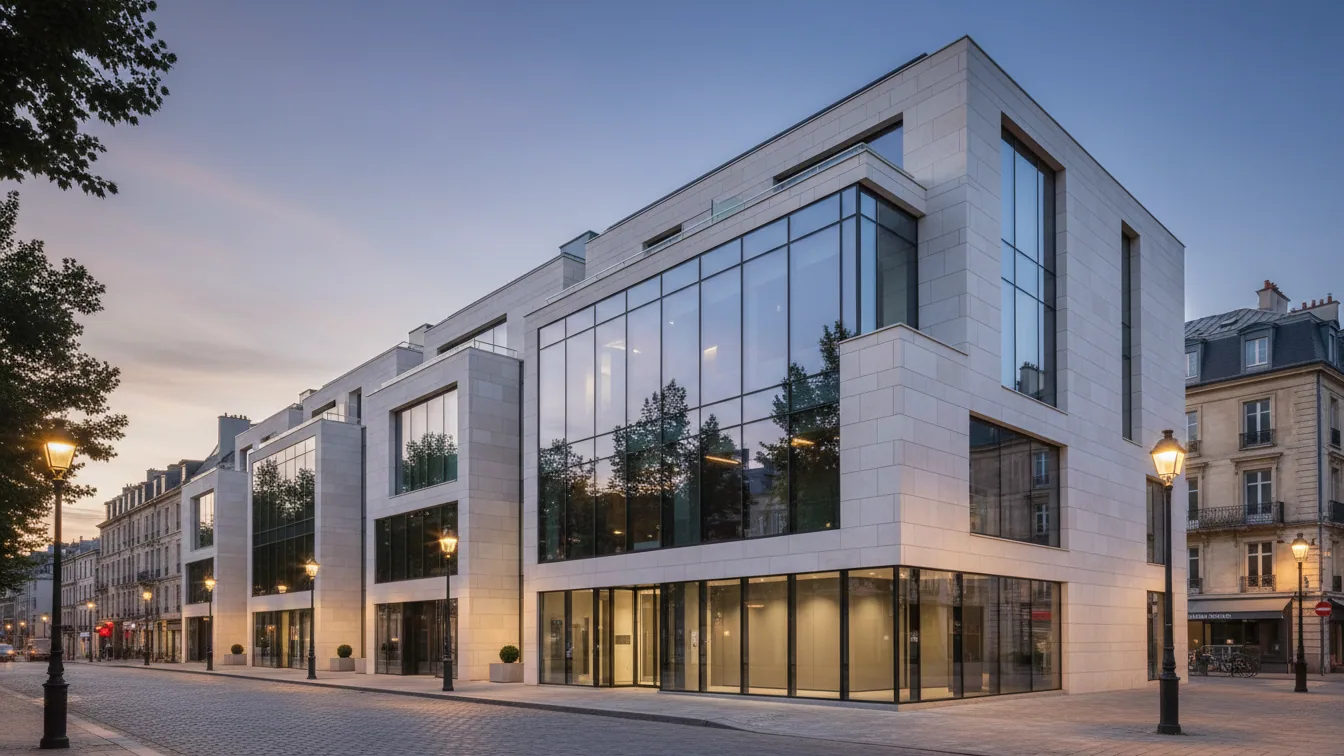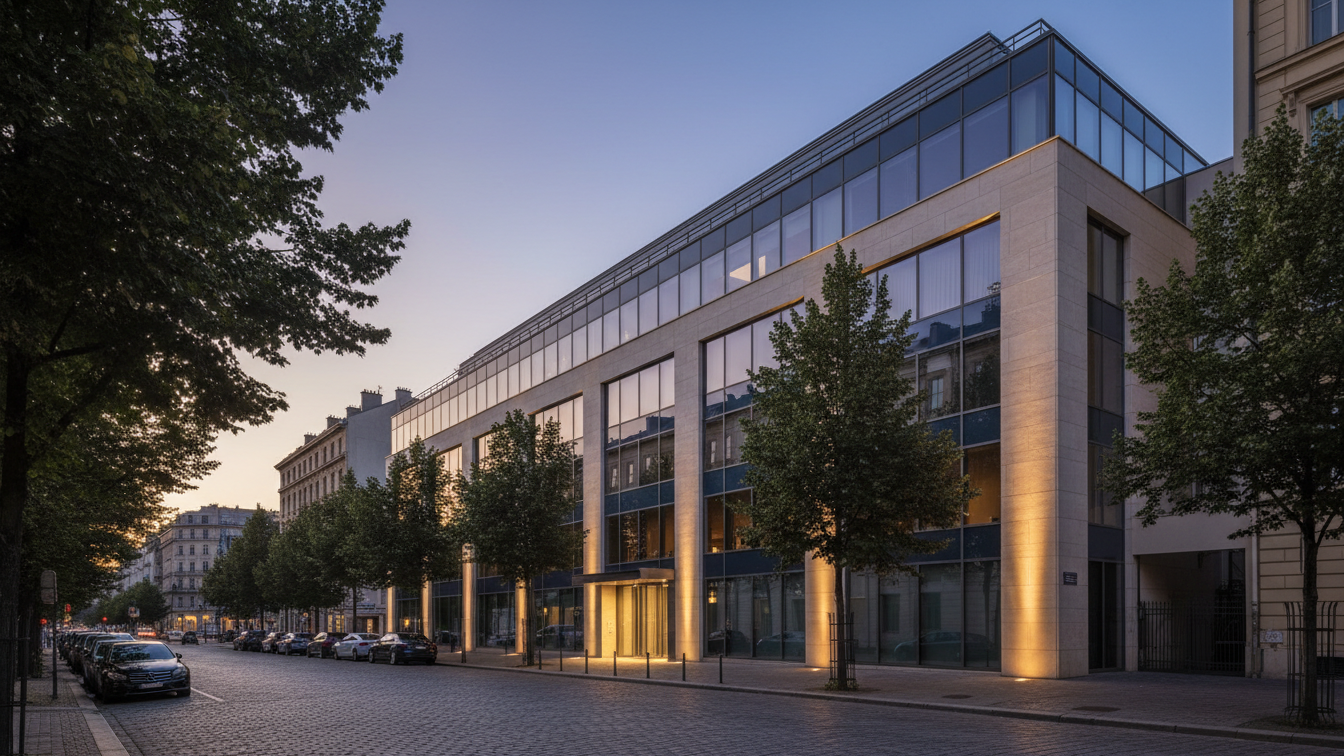
Together with Union Investment, Tattersall Lorenz, and SPIE, synavision, a company specialising in digital operational optimisation and technical monitoring, has noticeably reduced energy consumption at the Global Gate III (H039) office building. The property is owned by Union Investment and is situated on Grafenberger Allee in Düsseldorf. Through the use of the syna.energy monitoring solution, heat and common-area electricity consumption across the property fell by 17.2 per cent, which simultaneously led to a corresponding reduction in CO2 emissions.
The starting point for the measures at the approximately 11,000-square-metre office building was a systematic assessment of actual consumption during ongoing operations, as well as the identification of economically viable optimisation potential. For this purpose, meter and consumption data from the property were continuously recorded, monitored, and evaluated. On this basis, synavision developed targeted interventions to enhance energy efficiency and readjust overall plant operations.
Measurable consumption reduction during ongoing operations
According to Dr Stefan Plesser, Managing Director of synavision, operational building management frequently lacks sufficient transparency regarding actual consumption and emissions. In the case of Global Gate III, operating data was first precisely measured and analysed in order to derive tailored steps. In addition to lowering excessive supply air temperatures, adjusting room target temperatures contributed to savings while improving comfort for occupiers.
The consumption data reflects the success of the optimisations: adjusted for weather conditions and taking vacancy into account, the combined consumption of heat and common-area electricity stood at around 1.29 million kilowatt-hours in 2021. By 2025, this figure had fallen to approximately 1.07 million kilowatt-hours. This represents a decline of around 17 per cent.
Efficiency gains in cooling supply
Another key lever was identified in the property's cooling supply. Because only two IT server rooms required cooling during the heating period, the central refrigeration plant previously ran at inefficient partial load, resulting in high distribution losses and auxiliary power requirements. Following synavision's recommendation, decentralised split units were installed and successfully commissioned for the server rooms.
- —Continuous recording and AI-supported analysis of meter and consumption data
- —Adjustment of room target temperatures and reduction of high supply air temperatures
- —Installation of decentralised split units for IT rooms to relieve the central cooling system
- —Compliance with statutory requirements under Section 56 of the Building Modernisation Act
The project in Düsseldorf demonstrates that collecting data alone is not the decisive factor, but rather translating it into practical, workable measures. By deploying AI-based analyses, synavision supports owners in sustainably lowering operating costs and reliably complying with statutory requirements, including Section 56 of the Building Modernisation Act.