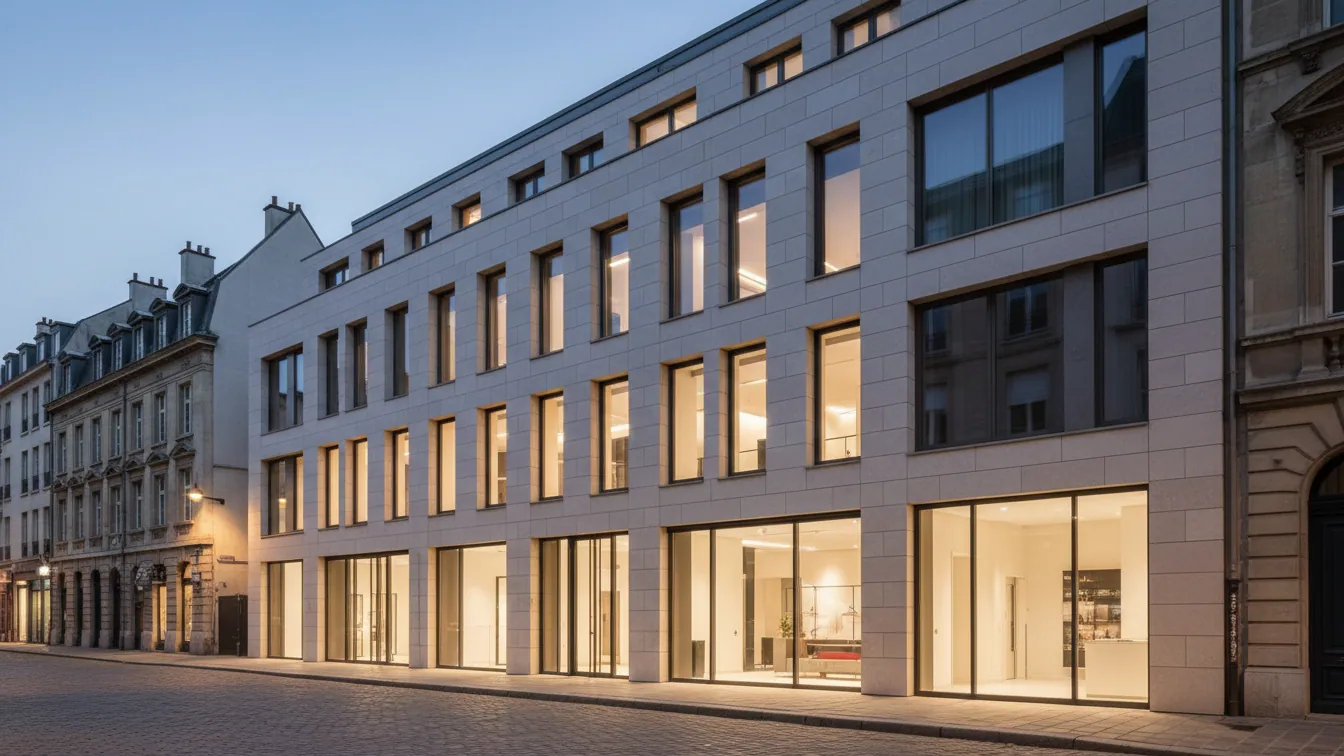
The modern office environment is often characterised by high noise levels and constant interruptions. A flood of notifications, messages, and endless streams of information continuously demand employees' attention. Recent studies indicate that distraction has increased threefold compared to the pre-iPhone era. This permanent overstimulation leads to a state of perpetual scatter.
Although distraction is often seen as a matter of personal discipline, digital environments show a clear tendency to divide, claim, and bind attention. However, design that divides attention can also restore it. It is possible to design work environments in a way that reduces anxiety and improves concentration.
The Signal Stack Concept
Alex O'Briant, a Principal at architecture firm Steinberg Hart with decades of experience in workplace and education design, has developed a framework for this called the “Signal Stack”. This model examines three levels of a space – its explicit purpose, the physical environment, and the rules for its use – to optimally support concentration. These strategies can be applied in both new builds and existing offices to minimise cognitive load and help employees identify the most suitable place for their tasks.
The fundamental question to answer is: what is the unambiguous purpose of this space? If a space does not send clear behavioural signals, working memory is expended trying to figure out where to sit, how loudly one can speak, or what tasks are appropriate. Defining purpose means specifying the primary working style a space should support and being prepared to exclude competing uses.
Designing for Different Modes of Concentration
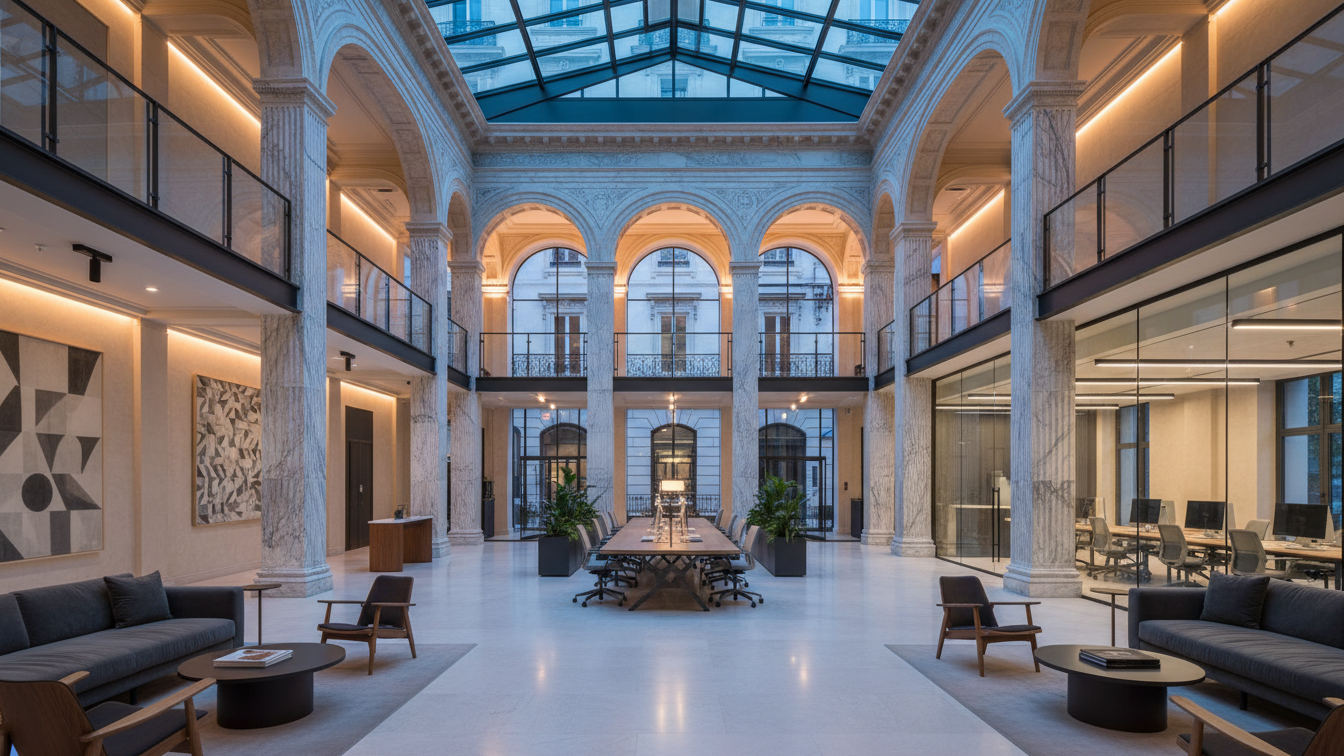
A workplace should offer clearly defined areas for various attention modes, such as concentrated individual work, collaborative project work, private phone calls and virtual meetings, as well as spaces for rest and social interaction. It is not necessary for every activity to have its own separate area, but it should be avoided to force incompatible activities into the same environment.
- —**Spaces for concentration** should be positioned away from active thoroughfares and communication areas, with adequate acoustic and visual separation.
- —**Collaborative environments** should facilitate coming together, presenting work, and flexible movement.
- —**Social areas** belong near shared facilities and active routes, where conversations contribute to the energy of the workplace.
- —**Incorporating spaces for movement and quiet** is also crucial, as movement fosters ideation, while quiet supports concentration.
Lighting, materials, acoustics, furniture, and technology within these spaces should support the intended activity and not send conflicting sensory signals. The environment should also offer opportunities for attention restoration. Encouraging personalisation and providing choices in the use of a space can further reduce distractions by adapting the environment to the individual sensory, cognitive, and emotional needs of users.
In addition to these aspects, guidelines for the use of spaces are also crucial. Alex O'Briant emphasises that operational design can protect or prohibit behaviours by clearly codifying the purpose of a space. For example, if a flexible meeting room is designed with movable furniture and mobile whiteboards, leaders should consider a reset policy. Such a policy ensures that the room is returned to a predetermined configuration after each use, preventing one team from distracting the next. Policies pick up where environmental features leave off.