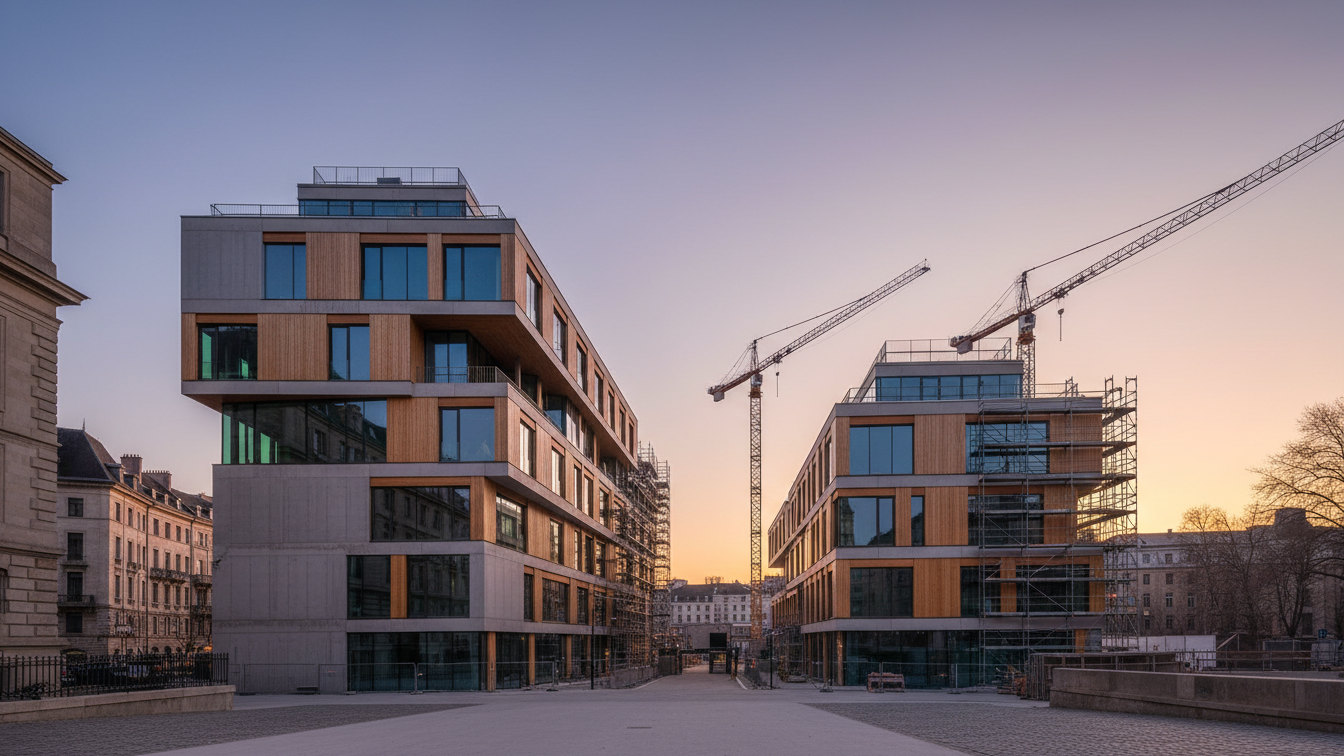
Leading specialists in the German care property market, including representatives from JLL, Pecuria, and ORIZN Investment, provided a comprehensive assessment of the current market situation on 9 September 2026. The experts shed light on various aspects, from transaction volumes and new-build developments to the structural challenges facing the industry. The analysis revealed a complex situation that presents both potential and significant hurdles for investors and developers.
Transaction Volume and Market Mechanisms
Peter Tölzel, Senior Director Healthcare Investment at JLL, predicted that the healthcare investment market is likely to reach a transaction volume of over two billion EUR again in 2026, which is above the long-term average. He noted, however, that a full market recovery has not yet occurred, as individual large transactions could significantly influence the overall picture. Tölzel emphasised that the care property market does not suffer from a demand problem, but primarily an economic viability problem. To stimulate new construction on a larger scale again, either construction costs would need to be reduced, refinancable rents increased, or effective tax incentives implemented. The construction of new care homes has not completely halted, but is continuing at a reduced intensity. Even in 2026, new-builds were sold to institutional investors from Germany, demonstrating the fundamental functionality of the market, but this is not sufficient to meet demand.
Challenges in New Construction and Portfolio Management
Pascal Kleine, Managing Director of Pecuria, underlined that the care property sector is not standing still. Specialised players are realising new projects even under the currently difficult conditions. A central problem is the withdrawal of many traditional developers and broadly diversified investors from this segment. Without pronounced specialisation and in-depth expertise, care property development is hardly feasible anymore. Kleine also pointed out that the supply gap is not solely due to a lack of new construction, but also to older care homes exiting the market because they are no longer sustainable from a technical, regulatory, or economic perspective. The exact dimension of this additional replacement need is currently still unclear. He identified a decisive advantage for private investors over institutional investors, as the former can utilise tax incentives and depreciation opportunities. This enables the economic viability of new-build projects that are barely feasible for institutional investors under current conditions.
Berthold Becker, Managing Partner at ORIZN Investment, added that the new construction of care properties at an institutional level is de facto not taking place. High construction costs, expensive debt capital, and comparatively low sales factors prevent profitability and the alignment of risks and returns. He stressed that individual realised projects do not change the fact that the foreseeable demand cannot be met. Becker quantified the investment requirement in the care sector up to 2040 at approximately 100 billion EUR, of which around 40 billion EUR would be for adapting the existing property portfolio. This shows the necessity not only to create additional capacity but also to make the existing stock future-proof. Furthermore, he criticised the lack of engagement with more efficient use of existing resources. Digitalisation and Artificial Intelligence could significantly free up resources and increase productivity, particularly in administration, documentation, and reporting, but this has been neglected so far – not least due to a lack of refinancing at the political and regulatory level.