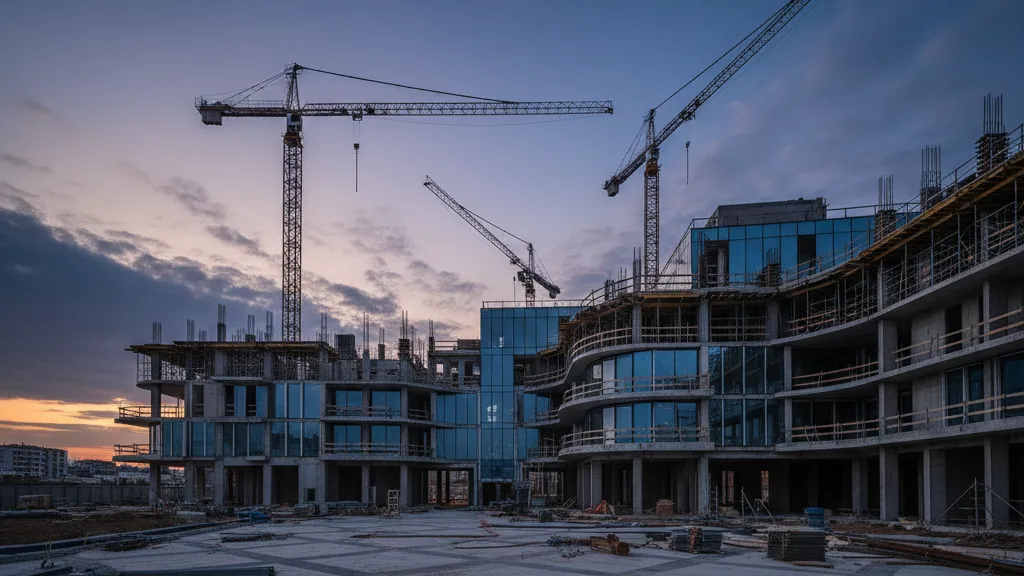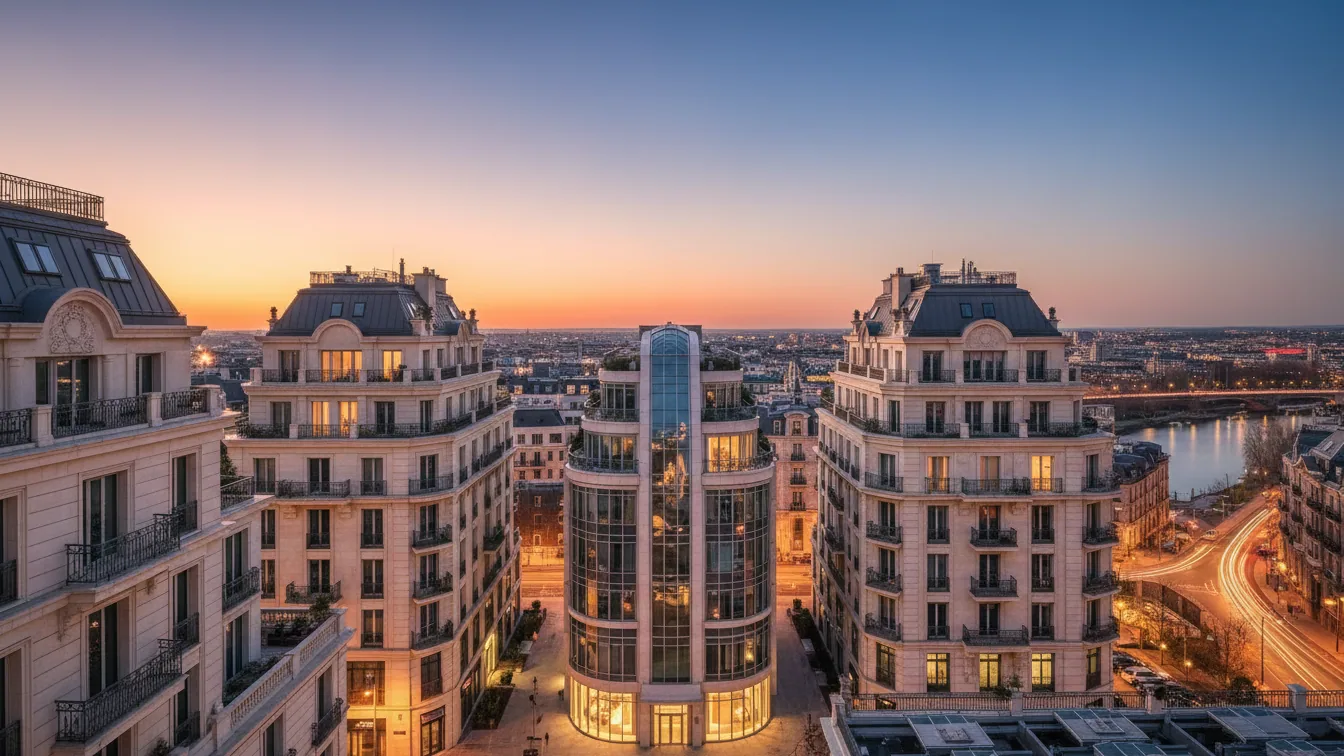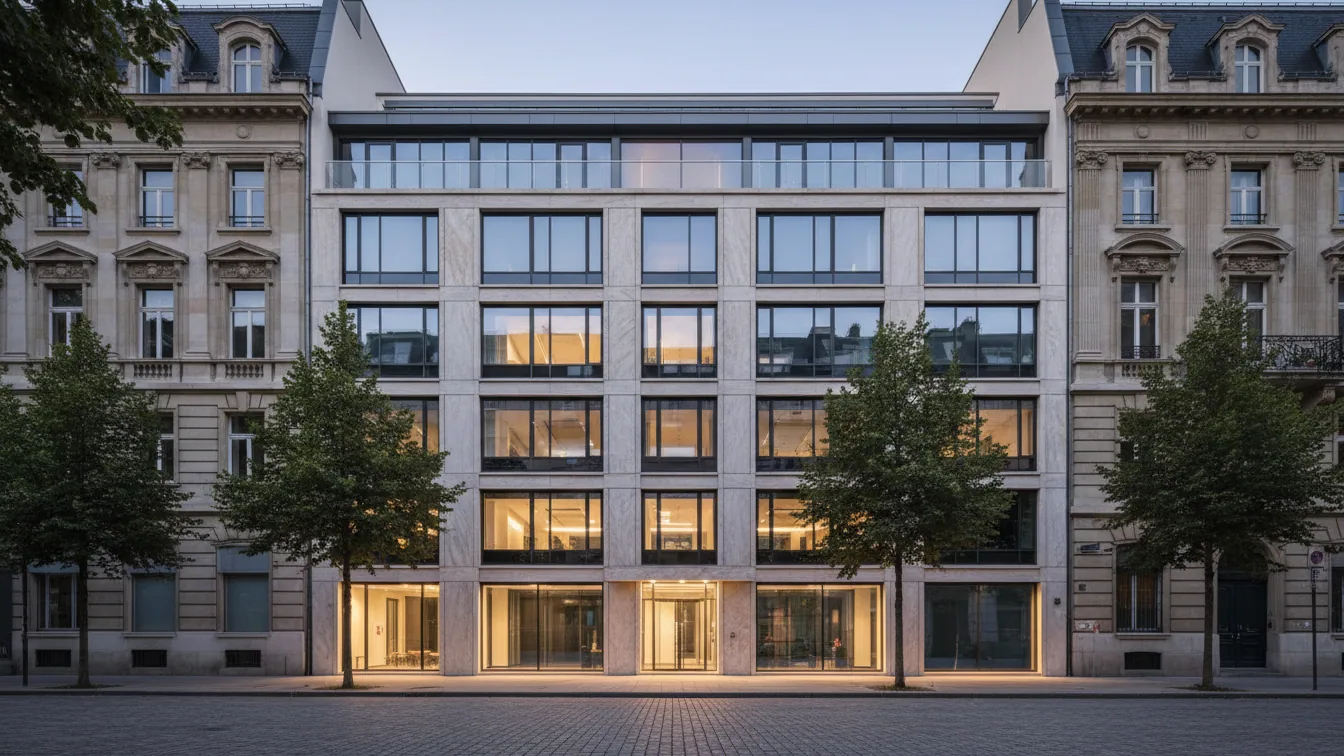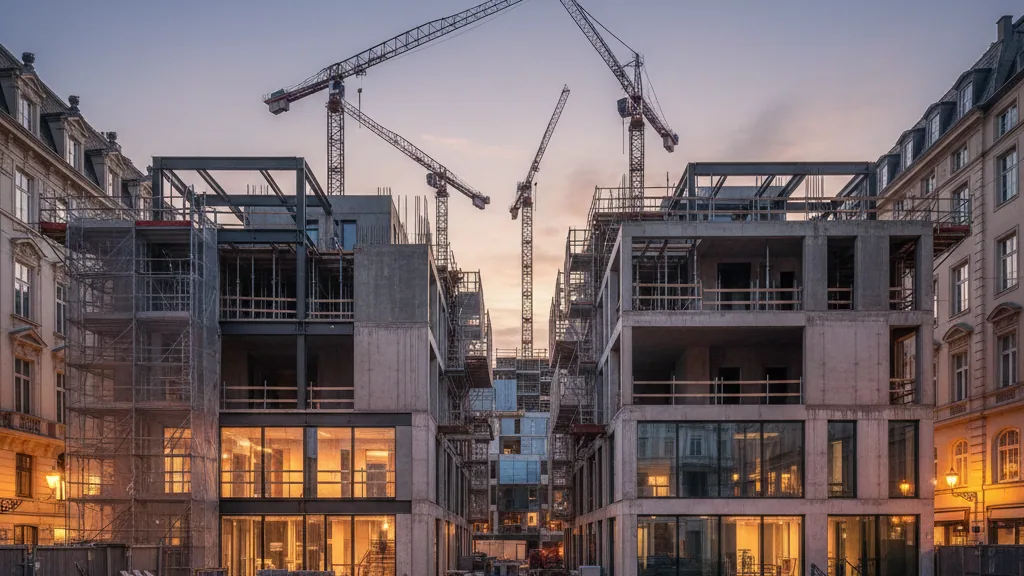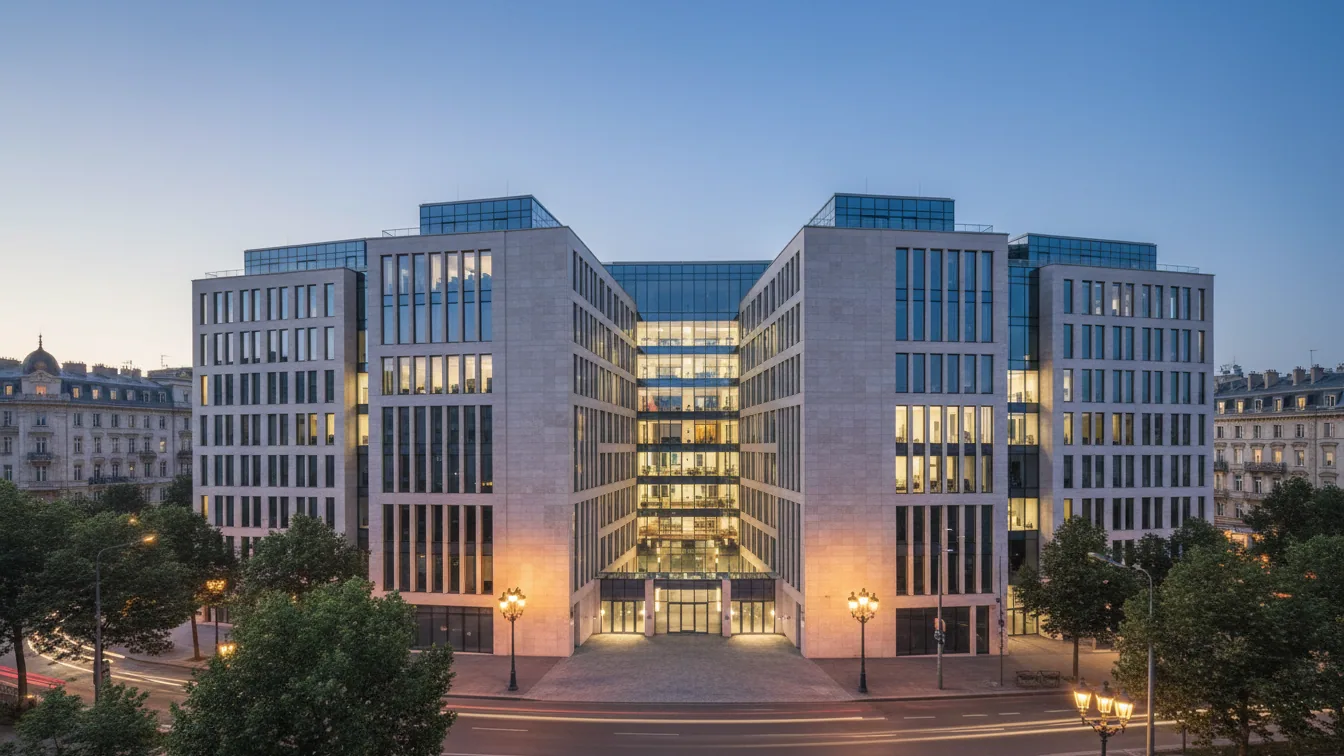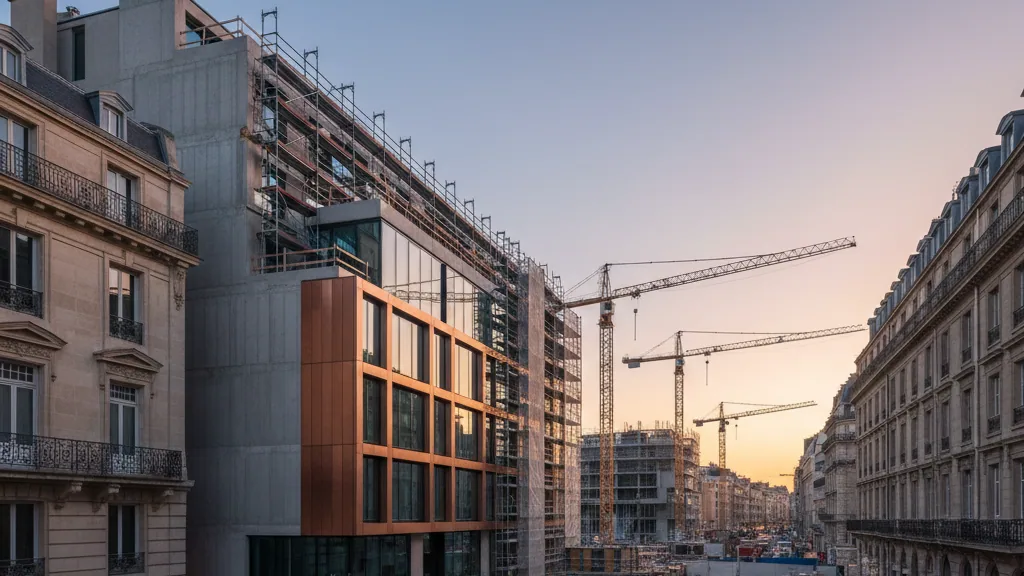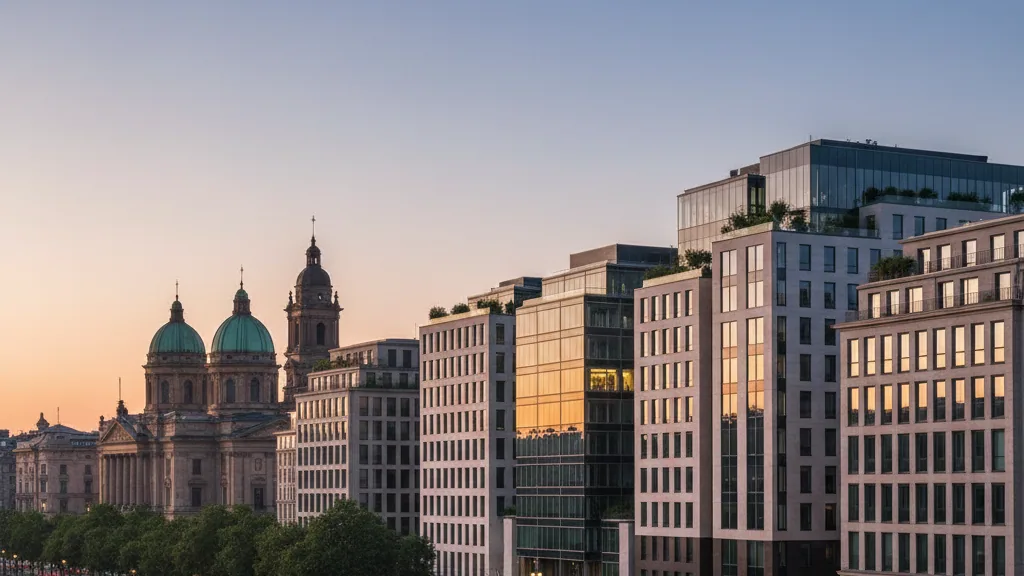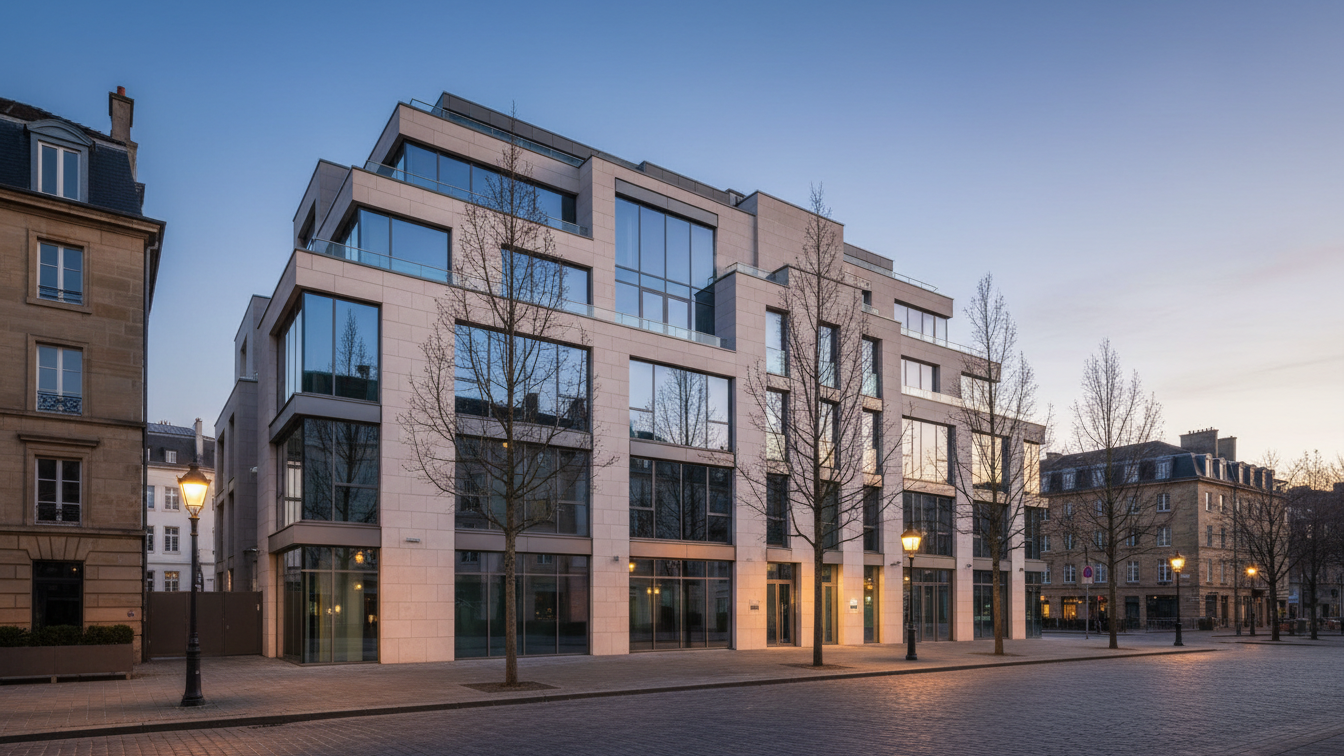
The German Real Estate Association (IVD) has presented its latest Commercial Price Survey 2026/2027. The analysis of market data from around 410 cities and regions paints a picture of an increasingly divided market. While modern, energy-efficient office space in good locations achieves further rental growth, vacancy risks are mounting for older buildings. In the retail sector, rent reductions continue primarily in medium-sized and large cities, while commercial building land prices are stabilising following earlier declines.
In the office segment, rents for space with good utility value rose nationwide by 1.6 per cent in the first half of 2026 compared with the same period of the previous year, while prime rents increased by 1.4 per cent. For medium-quality space, the increase was modest at 0.3 per cent, while basic space stagnated. Monthly net cold rents in the second quarter of 2026 averaged 8.90 EUR per square metre for basic space, 11.90 EUR for medium-quality space and 16.80 EUR for good office space. While rents have risen nominally by 37 to 41 per cent since 2010, adjusted for inflation they currently sit between 1.3 and 3.2 per cent below the level of that time.
In parallel, office vacancy is rising. In 15 selected locations, the vacancy rate grew year-on-year from 6.4 to 7.3 per cent, while in the seven core cities it stood at 9.0 per cent at the end of the third quarter of 2026. As IVD Vice President Jeanette Kuhnert explains, this is not a general move away from the office, but rather a reflection of changing requirements: employers seek efficient working environments that offer high added value for staff, which is why older stock faces modernisation pressure. IVD Vice President Axel Quester highlights that energy efficiency and flexibility of use are critical in determining whether properties can be operated economically in future.
Munich maintains top position in city comparison
In Germany's eight largest cities, rents for good office space rose by an average of 0.5 per cent, although local submarkets are developing very unevenly:
- —Munich remains the most expensive market at 52 EUR per square metre for good office space and recorded rental growth of four per cent, while prime rent reached 62 EUR.
- —Cologne recorded an increase of a good two per cent for good office space.
- —Düsseldorf suffered a noticeable decline of a good 14 per cent in the same segment.
- —Leipzig is the most affordable market among the eight major cities at 13.50 EUR per square metre for good space.
Structural change in brick-and-mortar retail
The situation in city-centre retail remains challenging. In prime 1a locations, shop rents fell nationwide in the first half of 2026 by 3.2 per cent for large-format units and 3.7 per cent for small units. Prime rents dropped by around 6.6 per cent. Since their peak in 2017, rents in 1a locations have shed roughly 30 per cent nominally; adjusted for inflation, they stand 40 per cent below the 2010 level. Secondary 1b locations also saw values soften by 1.0 and 2.5 per cent respectively.
While central locations in large and medium-sized cities suffer from consumer caution and online shopping, smaller towns remain comparatively stable with changes between minus 0.1 and plus 1.1 per cent thanks to local neighbourhood provisioning. Across Germany as a whole, the report forecasts a further decline of 4,900 shops to 296,600 units; ten years ago, the market still counted 366,800 shops. By contrast, commercial building land maintains its price level, consolidating the foundation for future developments.