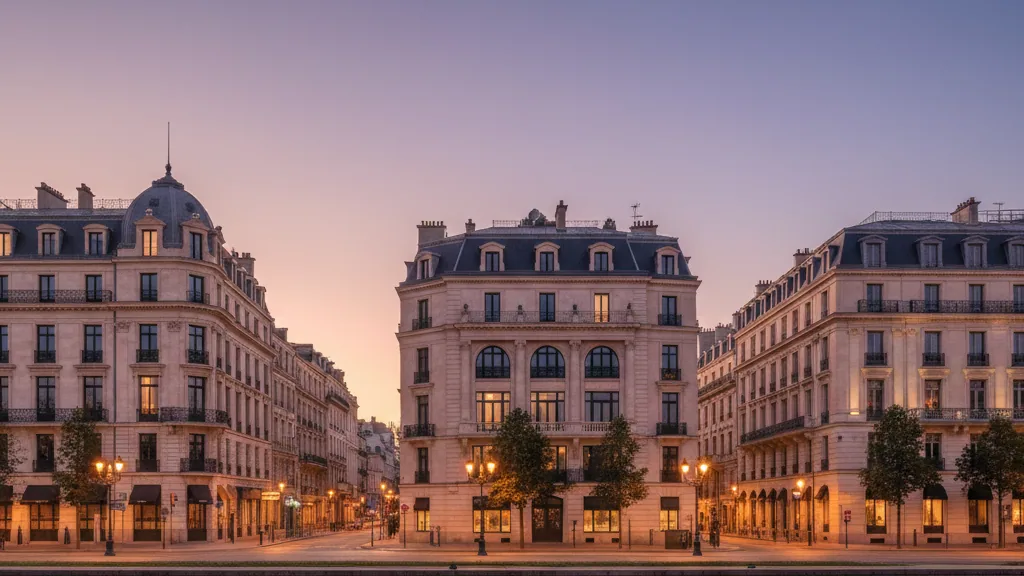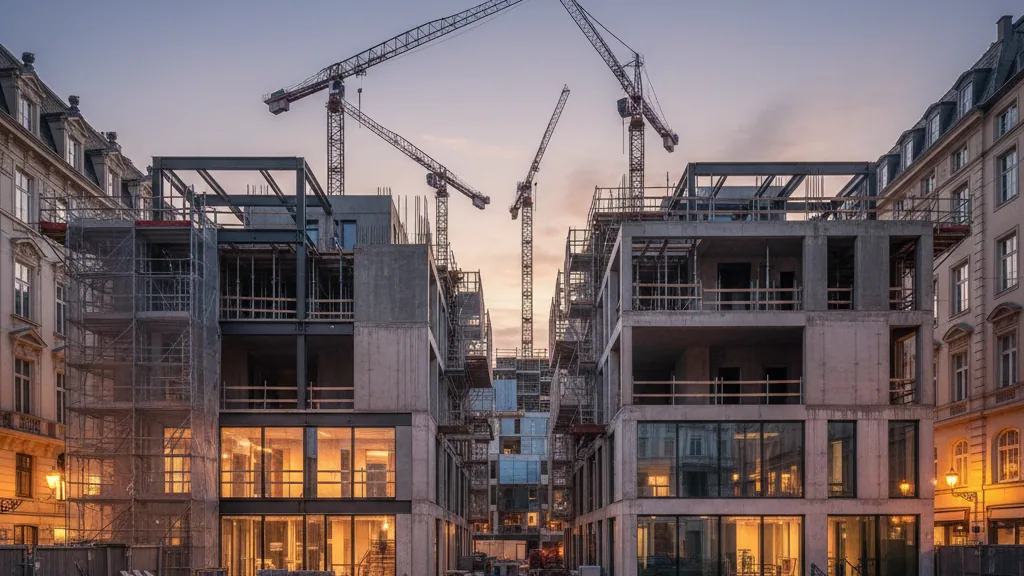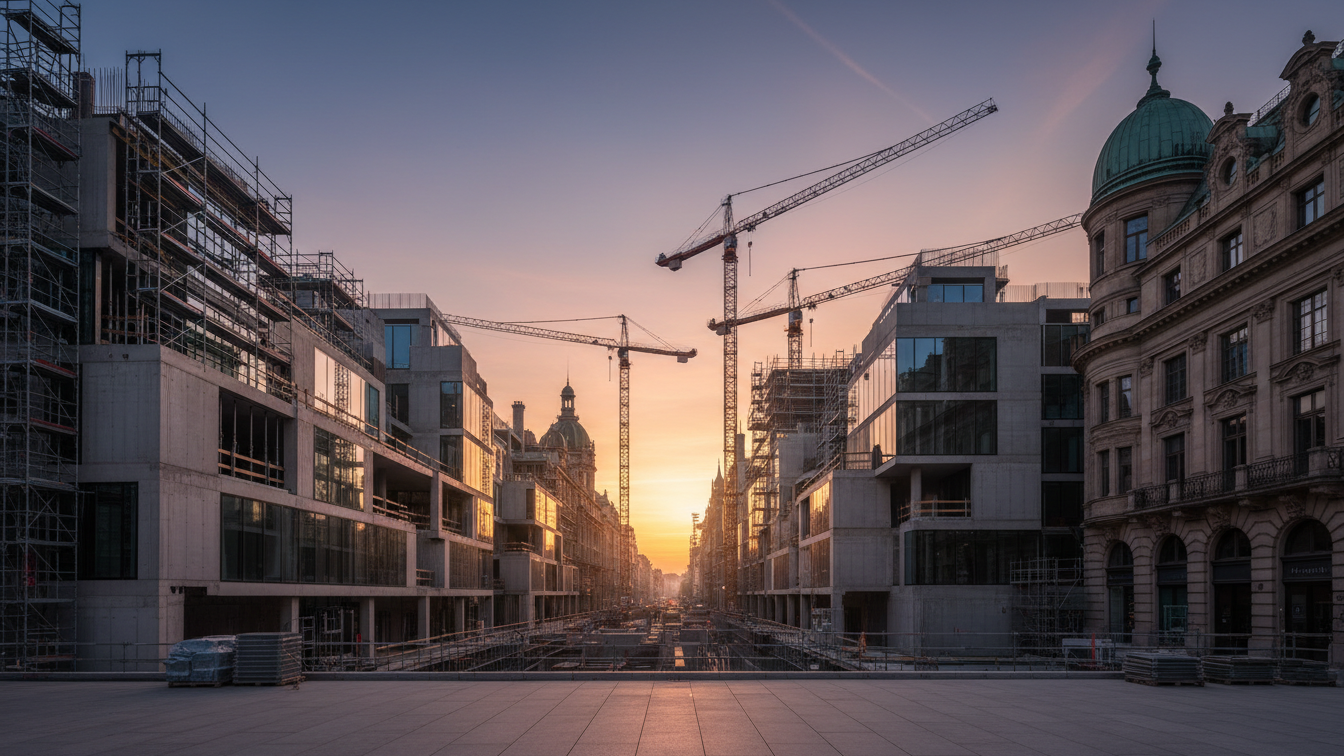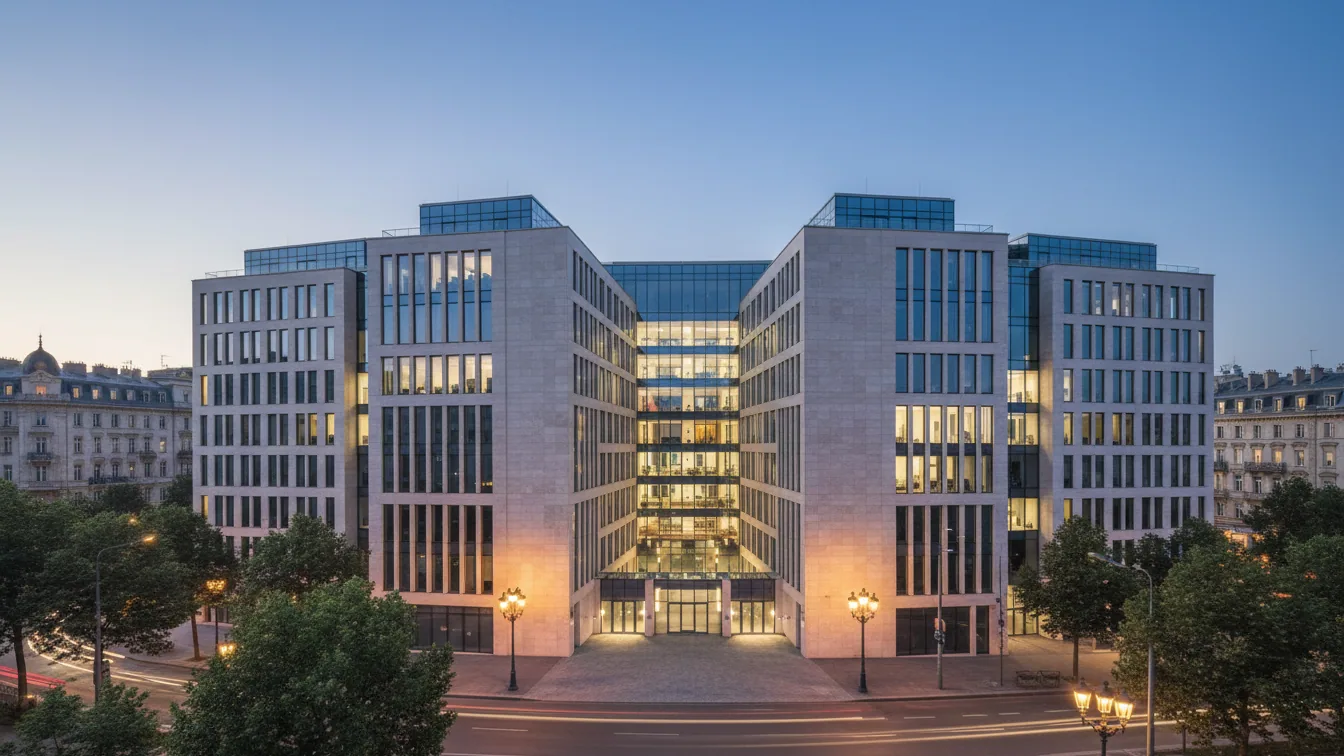
The design of urban spaces faces the challenge of optimally utilising limited space. A key finding from a new study by Lödige Industries in collaboration with bable smart cities and IFH Cologne indicates that the issue of mobility is increasingly a question of space in many cities. To generate high-quality open spaces for housing, greening, quality of stay and safe mobility solutions, efficient organisation of parking space proves to be an effective instrument. This can be achieved without compromising the necessary accessibility of city centres.
The study emphasises that the long-term success of urban development does not primarily depend on the creation of additional traffic areas, but significantly on the ability to transform existing space more efficiently and in a more balanced way. For every new square metre of green space, every recreational area, for infrastructure for pedestrian and cycle traffic or charging stations, areas are needed that are barely available in densely populated urban environments. Parking management is named by surveyed European urban planners as one of the most effective instruments for modern urban development.
Demands on Urban Accessibility
Despite the necessity for space optimisation, the importance of individual transport for many citizens must be taken into account. A population-representative survey by IFH Cologne showed that 93 percent of respondents consider good accessibility a fundamental prerequisite for visiting a city centre. 67 percent stated that access to the city centre would be difficult for them without a car. This underscores the need to continue providing parking spaces, even if they currently occupy significant urban areas. In Berlin alone, 1,276,312 registered on-street parking spaces cover a total area of approximately 14.6 square kilometres, which corresponds to the area of an average small town.
Dr. Markus Preißner, scientific director at IFH Cologne, noted that the automobile remains an integral part of individual mobility for many people. The central task is not to reduce mobility as such, but to organise it in a more space-efficient manner. Concrete solutions must therefore ensure accessibility and simultaneously create space for other essential functions of urban development. One example of such integration is the transformation of the former industrial port area in Aarhus, Denmark.
Practical Example: Aarhus
As part of the development of the DOKK1 cultural centre in Aarhus, approximately 1,000 parking spaces were moved underground. The space-saving accommodation of vehicles was achieved with an automatic parking system from Lödige Industries. This measure allowed for a largely car-free surface design, thereby creating valuable open space for public uses directly by the water. This project demonstrates how individual accessibility and the development of an attractive public space with green areas and recreational zones can be successfully combined. Lödige Industries is internationally involved in urban transformation projects to implement parking solutions without ramps and driveways, enabling significant space savings. Future urban development largely depends on using public space more efficiently and sustainably, rather than treating motorised individual transport and urban development as opposing concepts.