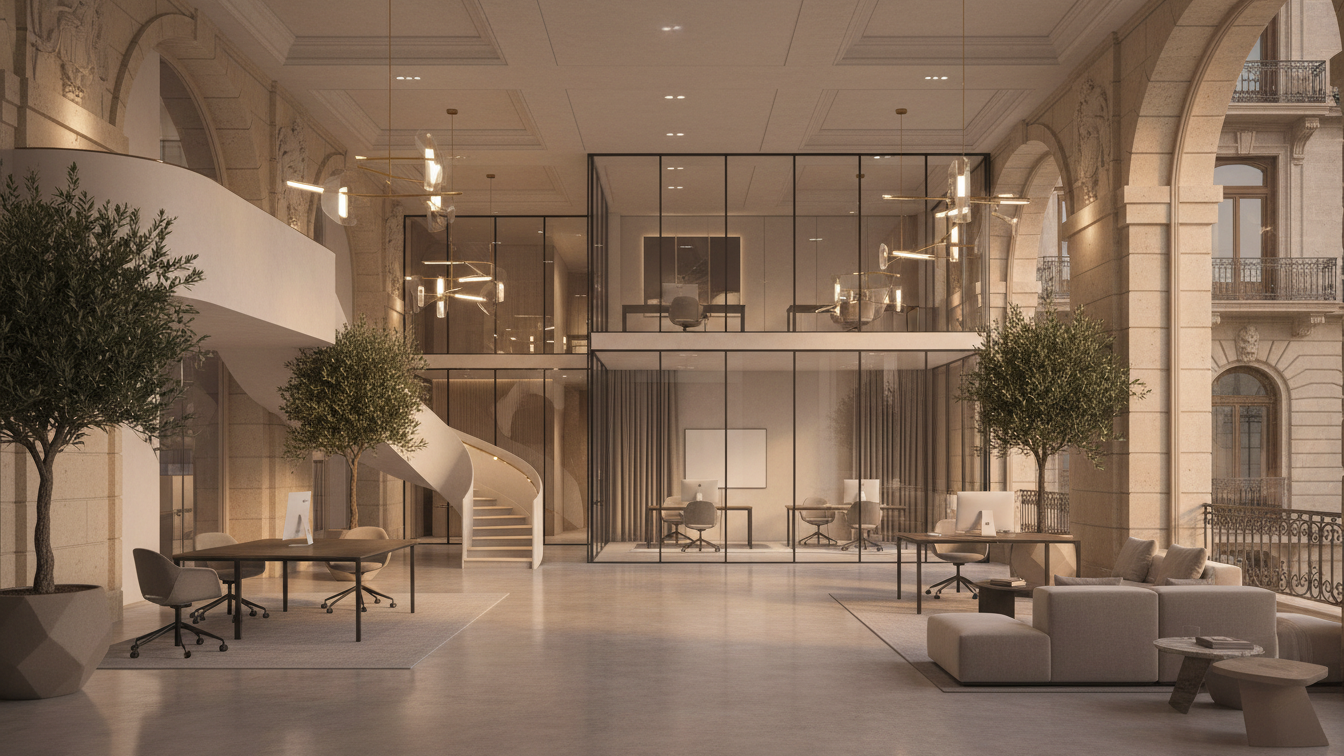
Planning a home requires a perspective that extends beyond the current stage of life. Central to this are flexible floor plans, comfortable usability, and low-barrier access solutions. These aspects are gaining increasing importance as they ensure a property's adaptability to changing life situations.
Accessible building is often exclusively associated with advanced age. However, the professional perspective reveals a broader relevance, encompassing comfort, safety, and the general adaptability of a home for different life phases. Concepts such as wider doors, threshold-free transitions, and well-thought-out circulation areas are not special requests but reflect a future-oriented construction method. The option of being able to use central rooms on the ground floor is an example of such considerations.
A home must meet a variety of requirements: it serves as a family residence, a place of retreat, enables working from a home office, and should ideally be flexibly adaptable to changing needs. Early consideration of these points during building planning creates long-term security and sustainable living quality. The investment in such a concept thus contributes to the value of the property for generations.
Advantages of Early Integration
Jürgen Hauser, Managing Director of Bien-Zenker, emphasises that forward-thinking construction secures a house's functionality for decades to come. Age-appropriate solutions are therefore not limited to a specific age group but promote comfort, flexibility, and future-proofing for all residents. Early integration of accessible concepts into house planning proves more economical and leads to a more harmonious design compared to subsequent adaptations.
- —Harmonious design implementation
- —Functionally compelling integration
- —More economical realisation compared to retrofitting
Details such as step-free access, generously dimensioned traffic areas, and the strategic placement of a bathroom, utility room, and an additional room on the ground floor offer significant advantages. These prove valuable during temporary or permanent impairments, in family phases with small children, or in later life.
Long-term Perspectives and Advice
Bien-Zenker supports clients with extensive experience in individual house planning. The company combines architectural design freedom with the ambition to develop living concepts that endure long-term. The resulting properties not only reflect the owners' personal style but also provide answers to key future questions regarding future living needs and the home's adaptability.
Decisions made during house construction have long-term effects. Therefore, asking the right questions early on is essential. Accessible building does not restrict design but enhances quality of life and independence. Bien-Zenker advises prospective builders to make full use of consultations to address flexible and accessible living concepts in the early planning phase. Forward-thinking planning is thus always an investment in the future of living.