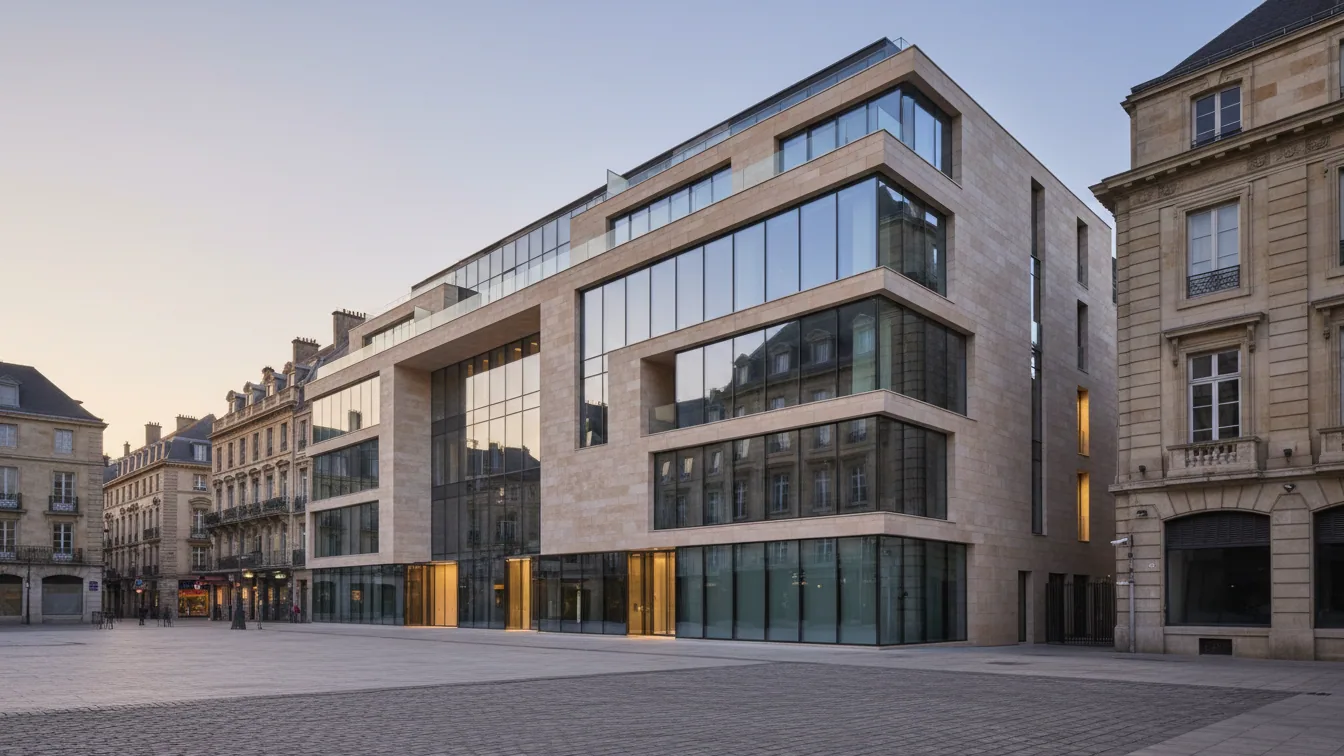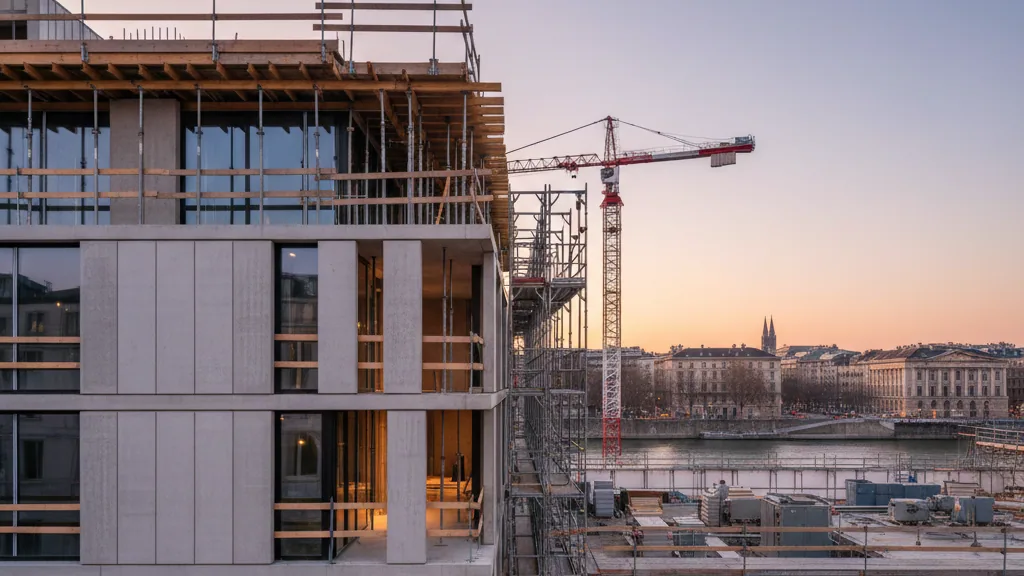
After several years during which Manhattan's Class A office properties benefited from steadily rising demand, the dynamics in this sector are shifting. Companies seeking well-maintained spaces at prices below the prime market are increasingly demanding Class B office spaces, while Class A is experiencing a slight decrease in attractiveness. A new generation of amenities could make the difference here.
According to CoStar, overall office demand in New York was 'red hot', but Class A demand – measured by new leases – was lower in the first half of 2026 than in the same period of the previous year, dropping from 11.6 million square feet in H1 2025 to 10.3 million square feet in 2026. Demand for Class B and C, however, is increasing due to factors such as lower Class A availability, rising Class A rents, and a competitive environment within Class B that has made amenities an increasingly common addition to formerly simple spaces.
New leases for Class B and C offices reached approximately 7 million square feet in the first half of this year. This not only surpasses activity in the Class B and C segments during the same period over the last three years, which ranged between 4.2 million and 5.2 million square feet, but also exceeds the pre-pandemic average from 2015 to 2019 of around 6.4 million. CoStar also noted that Class B and C products, classified as one, two, or three-star office buildings on a five-star scale, accounted for approximately 39 percent of new leasing activity on average before the pandemic. This share dropped to just 31 percent last year. In the first half of this year, this percentage has risen again to about 40 percent.
Standard Shift and Definitions
All this leads the data company to conclude that 'the recovery of the city's office market is no longer limited to prime or top-tier properties, but a more price-sensitive and mid-market demand is also returning.' This increasing demand, however, comes with a condition that goes beyond the numbers: Class B offices must offer at least some of the amenities previously found mainly in Class A premises. The current competitive environment therefore requires owners of Class B offices to think like Class A owners, albeit with less space and smaller budgets.
In discussing the efforts of Class B owners to upgrade their buildings, it should be emphasised that the terms Class A and Class B (and also Class C) are sometimes vaguely defined and always marketing-driven. Their definitions have shifted in recent years. Additionally, owners and brokers designate some buildings as B-plus or A-minus, and one company's Class A building might be considered A-minus elsewhere. Given the rise of prime properties with amenities such as dining concepts by top chefs, high-end spas, concierge services, and facilities resembling private clubs, standards at the top have significantly increased since the pandemic, pulling up the definitions of other building classes with them. A Class B office space today might therefore resemble what constituted the lower end of Class A just a decade ago.
Strategic Realignment Through Amenities
Empire State Realty Trust (ESRT) rejects the classifications and refers to some of its older but well-appointed buildings as 'pre-war trophies'. Ryan Kass, Executive Vice President, Co-Head of Real Estate and Chief Revenue Officer at ESRT, noted that the changed approach to amenities coincides with a recent shift in the meaning of the office itself. He explained that office space is no longer just a cost factor on the balance sheet. Office space, location, and offered amenities all contribute to employee attraction and retention, and ultimately to employee productivity. The task is to work with tenants to help them attract and retain top talent. This is the driving force behind all the company's activities.
In this regard, Kass explained that since COVID, the New York office market has evolved from a separation by fundamental class differences to a division between those who 'have something' and those who 'have nothing'. Tenants want modernised, amenity-rich, well-located buildings, and they want them from landlords who possess the financial strength and stability to deliver on their promises. ESRT is able to attract tenants who, while looking for glass and steel buildings, recognise the value in their product. They have carried out all modernisations. They have the infrastructure of new builds – indoor air quality, sustainability. They meet all the criteria that new builds would meet.
A Manhattan report by Cushman & Wakefield for Q2 2026 put asking Class A rents in Midtown at $88.50 per square foot, while asking rents for Class A offices in Midtown South were around $104.50. In comparison, several recently signed leases in ESRT buildings were concluded for asking rents in the low $60-per-square-foot range. These include Jencap Group, which paid $61 per square foot for 19,883 square feet at 1350 Broadway in October 2025, and Steve Madden, which leased 60,000 square feet at 501 Seventh Avenue in April 2026, also at an asking rent in the low $60-range.
Although these buildings are clearly assignable to the Class B category due to their rents, tenants are getting more for their money than the classification suggested until recently. This is because ESRT owns seven buildings within a compact area in Midtown, allowing them to house significant amenities in one building that can be used by tenants in all buildings. Kass mentioned that they own 6 million square feet within a small radius. The owner of a 300,000 square foot building probably cannot find the economic justification to install a conference centre for 130 people, as ESRT has at 1400 Broadway, or an auditorium for 250 people.