R
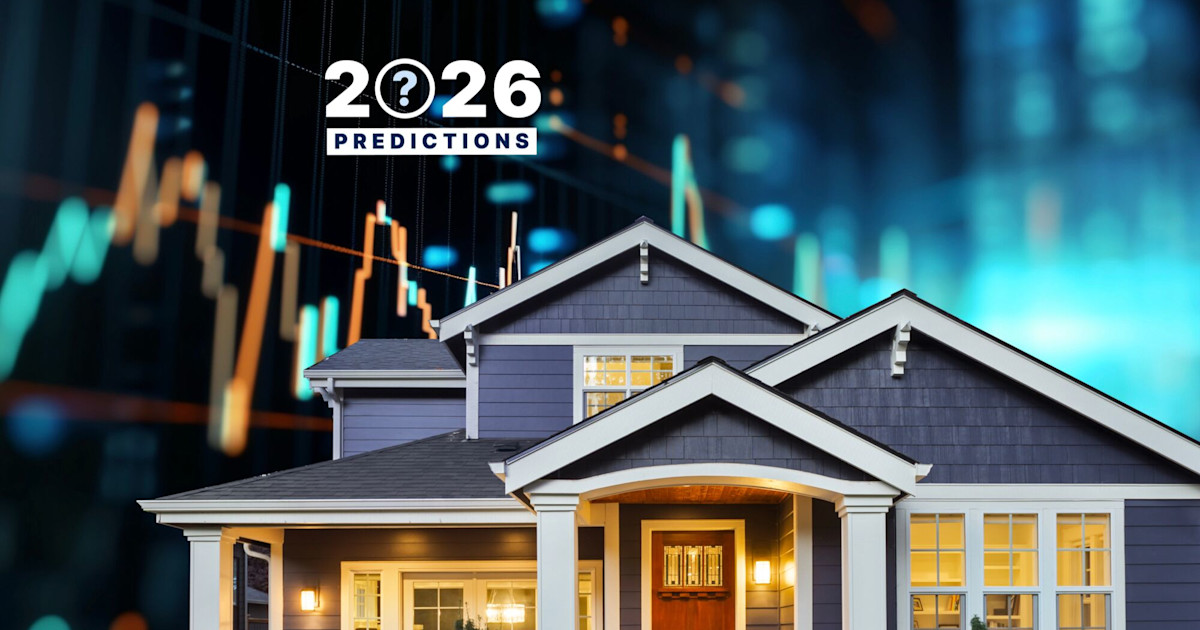
eal‑estate economists are releasing their first 2026 outlooks as the U.S. economy hangs in a precarious balance. While predictions for home sales differ dramatically, the consensus is that mortgage rates will fall and price growth will stay largely flat.
**2025 recap**
A year ago, most forecasts for 2025 were close to reality: 30‑year rates hovered above 6 %, and the pace of home‑price appreciation slowed. Home‑sale growth estimates ranged from modest to overly optimistic, leaving the market largely unchanged or slightly higher than 2024.
**2026 expectations**
The dominant narrative for 2026 is a gradual improvement for both buyers and sellers, even as uncertainty lingers. Mischa Fisher, Zillow’s chief economist, notes that buyers will benefit from more inventory and better affordability, while sellers will enjoy price stability and steadier demand. The year is expected to be a “reset” rather than a full rebound, with local conditions driving significant geographic variation.
**Sales forecasts**
Economists disagree on the magnitude of sales growth, reflecting the uncertainty about the labor market’s trajectory. Existing‑home sales are projected to rise between 1.7 % and 14 %:
- **Redfin**: 3 % increase → 4.2 million annual sales
- **Zillow**: 4.3 % increase → 4.26 million annual sales
- **Realtor.com**: 1.7 % increase → ~4.1 million annual sales
- **Bright MLS**: 9 % increase → 4.5 million annual sales
- **NAR**: 14 % increase → 4.6 million annual sales
Bright MLS attributes its higher estimate to pent‑up demand and modest affordability gains, yet cautions that activity will still lag pre‑pandemic levels. Redfin also calls 2026 a reset year, expecting a slow uptick as affordability improves.
**Mortgage‑rate outlook**
All analysts agree that 30‑year rates will decline modestly in 2026. Expected averages fall between 6 % and 6.3 %:
- **Bright MLS**: 6.15 % by year‑end
- **Redfin / Realtor.com**: 6.3 % average (down from 6.6 % in 2025)
- **NAR**: ~6 % average
- **Zillow**: unlikely to dip below 6 %
The drop is tied to inflation trends rather than Fed leadership changes. Daryl Fairweather of Redfin explains that if inflation eases enough to justify a rate cut, mortgage rates will fall, boosting sales. However, a weaker job market and cooling inflation could also dampen demand, potentially offsetting the benefits of lower rates.
**Price‑growth projections**
Most forecasters predict muted home‑price growth in 2026:
- **Redfin**: <1 % rise
- **Zillow**: 1.2 % rise → median price $417,560 (0.9 % increase)
- **Realtor.com**: 2.2 % rise (inflation may outpace it)
- **Bright MLS**: 0.9 % rise
- **NAR**: 4 % rise
The consensus is that high mortgage rates and elevated prices will keep median prices from climbing more than 1 % to 4 %. A second year of near‑flat growth could ease affordability, but wage growth still lags behind the surge in mortgage payments. John Burns of John Burns Research notes that mortgage payments have jumped 82 % over five years, while income rose only 26 %. Closing this gap would require a significant income boost, a sharp drop in prices, or lower rates—or a combination of all three.
**Key takeaways**
- 2026 is likely a reset year with modest gains for buyers and sellers.
- Home‑sales growth estimates range from 1.7 % to 14 %, reflecting labor‑market uncertainty.
- 30‑year mortgage rates are expected to fall to around 6 %–6.3 %.
- Home‑price growth will remain largely flat, with most forecasts predicting <1 % to 4 % increases.
- Local market conditions will drive significant geographic variation.
- Inflation and wage growth will continue to shape affordability and demand.